

Blackmail Laws in the Philippines: RA 10175, Penalties & Victim Rights
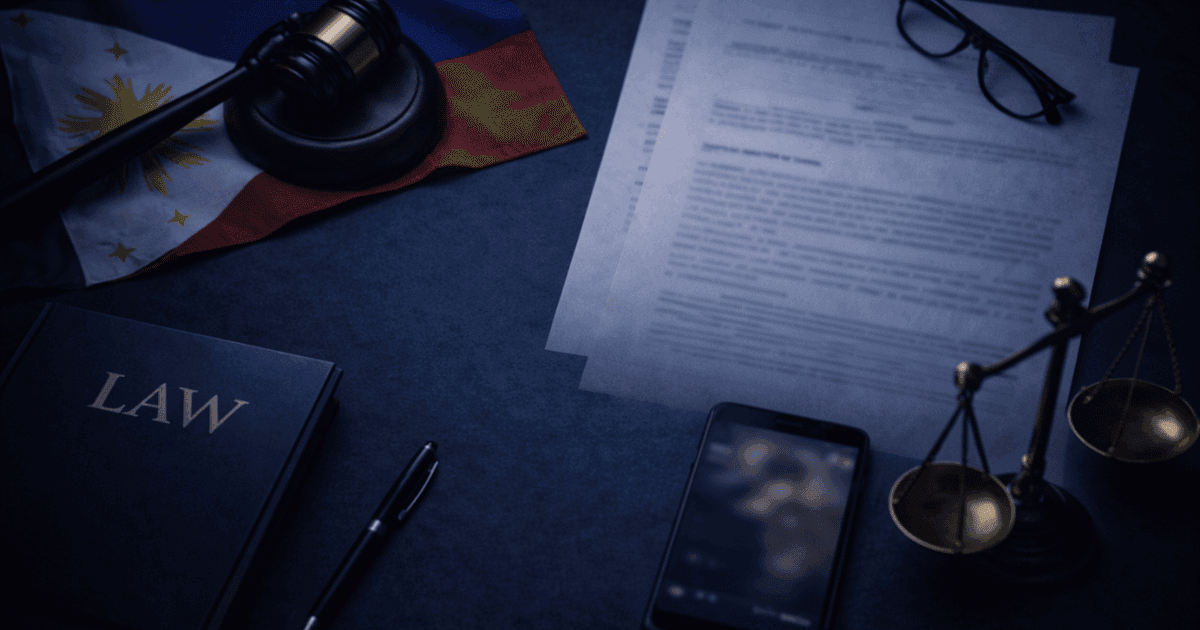
Blackmail in the Philippines is a serious criminal offense prosecuted under multiple laws. Whether it occurs through social media, messaging apps, or email, online blackmail carries significantly enhanced penalties compared to traditional extortion. Understanding the legal framework — particularly Republic Act No. 10175 and the Revised Penal Code — empowers victims to take decisive action and pursue justice effectively.
The Philippines has become a notable focal point for organized Filipino sextortion operations targeting victims internationally, making these laws increasingly relevant both domestically and for victims abroad dealing with Philippine-based perpetrators. Sextortion syndicates operating from the Philippines have victimized thousands of individuals across the United States, Europe, and Asia, often operating through fake social media profiles on dating apps and platforms like Facebook and Instagram.
Philippine Laws Governing Blackmail
Revised Penal Code (RPC)
The foundation of Philippine blackmail law lies in the Revised Penal Code, which addresses threats and extortion through several provisions.
- Article 282 Grave Threats: Punishes any person who threatens another with a wrong constituting a crime unless demands are met. This provision directly applies to blackmail involving threats to publish intimate images, expose damaging information, or cause physical harm.
- Article 283 Light Threats: Covers threats to commit wrongs that do not themselves constitute crimes — for example, threatening to expose an affair or embarrassing personal information. Penalized with imprisonment of 1 month and 1 day to 6 months (Arresto Mayor).
- Article 356 — Threatening to Publish Libel: Specifically addresses threats to publish defamatory content unless money or concessions are provided.
Republic Act No. 10175 — Cybercrime Prevention Act of 2012
RA 10175 is the critical legislation that transforms online blackmail from a standard criminal offense into a far more seriously penalized cybercrime. Its most important provision for blackmail victims is Section 6 — The Enhancement Rule, which states that all crimes defined under the Revised Penal Code, when committed through information and communications technology (ICT), carry a penalty one degree higher than the standard penalty.
In practical terms: blackmail sent via Facebook, Telegram, WhatsApp, Instagram, email, or any electronic platform automatically invokes RA 10175 and results in significantly heavier sentences than the same threats made in person.
Jurisdiction Under RA 10175
Philippine courts have jurisdiction over cybercrime cases when any element of the offense was committed within the Philippines, when Philippine computer systems were used, or when the victim was in the Philippines at the time of the offense. This broad jurisdictional scope means the Philippines can prosecute cases even when perpetrators operate partly from abroad, and facilitates cooperation with foreign law enforcement when Filipino citizens are victimized overseas.
When perpetrators reside outside the Philippines, the DOJ-OOC coordinates with international agencies through mutual legal assistance treaties. While enforcement across borders presents challenges, evidence gathered by Philippine authorities has successfully supported prosecutions in multiple countries.
- Republic Act No. 9995 — Anti-Photo and Video Voyeurism Act of 2009: Prohibits the distribution or publication of explicit photos or videos without the consent of the person depicted. Penalties include 3–7 years imprisonment and fines up to ₱500,000. This law directly applies to sextortion cases involving intimate image threats.
- Republic Act No. 10173 — Data Privacy Act of 2012: Applies when blackmail involves unauthorized access to or distribution of personal data. Victims can file complaints with the National Privacy Commission.
- Republic Act No. 7610 — Special Protection of Children Against Abuse: When victims are minors, this law applies alongside RA 10175, carrying penalties as severe as life imprisonment.
Penalties for Blackmail in the Philippines
Standard Penalties
Under the Revised Penal Code without the cybercrime enhancement:
- Grave Threats (Article 282): Imprisonment ranging from 6 months and 1 day to 6 years, depending on whether conditions were attached to the threat
- Light Threats (Article 283): Arresto Mayor 1 month and 1 day to 6 months
- Threatening to publish libel (Article 356): Arresto Mayor in minimum period
Enhanced Cybercrime Penalties
When committed through electronic means under RA 10175, all of the above penalties increase by one degree. For serious cases involving organized extortion, multiple victims, or substantial financial demands, perpetrators face prision mayor to reclusion temporal — up to 12 years imprisonment — along with substantial fines.
Cases Involving Minors
When victims are minors, RA 10175 works in conjunction with RA 7610 and the Anti-Child Sexual Abuse or Exploitation Materials Act. These combined penalties can reach life imprisonment and fines of up to ₱2,000,000, as demonstrated in the 2024 Supreme Court case People v. Luisa Pineda. Filipino sextortion operations frequently target minors, making these enhanced protections particularly significant for international victims.
How to Report Blackmail in the Philippines?
Philippine National Police — Anti-Cybercrime Group (PNP-ACG)
The PNP-ACG is the primary law enforcement body for cybercrime reports:
- Location: Camp Crame, Quezon City
- Hotline: (02) 8723-0401 local 7491
- Online: Reports can be filed through the e-Blotter system or PNP-ACG official channels
National Bureau of Investigation — Cybercrime Division (NBI-CCD)
The NBI is often preferred for complex cases involving international syndicates or cases requiring sophisticated technical investigation:
- Location: NBI Building, Taft Avenue, Manila
- Preferred for: Cases involving organized crime groups, international perpetrators, or large-scale operations
Department of Justice — Office of Cybercrime (DOJ-OOC)
The DOJ-OOC provides legal assistance, coordinates with international agencies when perpetrators operate outside the Philippines, and serves as the central authority for international mutual assistance requests under RA 10175.
Need Expert Help?
Our team has resolved thousands of cases. Get confidential support now.
Victim Rights and Legal Remedies
Criminal Prosecution
Victims have the right to file criminal complaints directly with the PNP-ACG or NBI-CCD. Provide all evidence — screenshots of threats, payment demands, identifying information about the perpetrator, and a detailed written account of events. Law enforcement will conduct digital forensic investigation including IP tracking and platform record requests.
Civil Remedies
Beyond criminal prosecution, victims can pursue civil lawsuits for damages including emotional distress, reputational harm, therapy costs, and lost income. Civil cases proceed independently of criminal proceedings, giving victims recourse even when criminal prosecution is delayed.
Data Privacy Complaints
When blackmail involves unauthorized use of personal data, victims can file complaints with the National Privacy Commission against data controllers who failed to protect personal information that was later used for extortion.
What to Do If You're Being Blackmailed?
Stop All Communication
Cease all interaction with the perpetrator immediately. Do not respond, negotiate, or attempt to reason with them — every response provides psychological leverage and signals that pressure is working. Block them across all platforms simultaneously. If you are unsure how to proceed, stop blackmail specialists can guide you through the process. The instinct to engage or explain yourself is understandable, but silence combined with swift legal action is consistently more effective.
Document Everything Thoroughly
Before blocking, create comprehensive documentation of all evidence:
- Screenshot every message, threat, and demand with timestamps and usernames clearly visible
- Save any photos, videos, or files sent by the blackmailer
- Record the platform where threats occurred, the perpetrator's profile URLs, and any payment account details they provided
- Note all dates and times of interactions in chronological order
- Save any identifying information about the perpetrator — phone numbers, email addresses, profile photos
Store this evidence securely in multiple locations: cloud storage, external drives, and printed copies. Philippine law enforcement relies heavily on digital evidence, and comprehensive documentation significantly strengthens any criminal complaint filed with the PNP-ACG or NBI-CCD.
Do Not Delete Content
While the instinct is to erase all traces of the threat, preserve everything for law enforcement. Screenshots and original message records are essential evidence for criminal investigation and potential prosecution under RA 10175. Deleting content before reporting can weaken your case.
Secure Your Accounts
Strengthen security across all accounts immediately:
- Change passwords to strong, unique passphrases on every account
- Enable two-factor authentication everywhere possible, preferring authentication apps over SMS
- Review privacy settings across all social media profiles and restrict public information
- Check login history for unauthorized access attempts
- Remove connections to suspicious third-party apps or services
- If the blackmailer accessed accounts through hacking, notify the affected platforms directly
Reporting Evidence to Authorities
When filing your report, bring printed screenshots of all communications, usernames and platform identifiers, payment account details if money was demanded, and a written timeline of events. The more comprehensive your documentation, the stronger the investigation. Both the PNP-ACG and NBI-CCD have experience with digital forensics and can work with international platforms to obtain account records. Report blackmail promptly — the sooner authorities receive your documentation, the stronger the investigation.
Protect Yourself with the Right Help
For victims dealing with Philippine-based blackmailers, online harassment removal services can coordinate content removal across platforms regardless of the perpetrator's location. If content has already been distributed, content removal specialists work with platform legal departments to expedite takedown and prevent re-posting. For cases involving intimate images, revenge porn removal services operate independently of criminal proceedings and can act within hours.
Being blackmailed is never your fault. Philippine law provides serious consequences for perpetrators, and both domestic and international enforcement mechanisms exist to pursue justice across borders. The combination of the Revised Penal Code and RA 10175 gives Philippine law enforcement powerful tools — and victims powerful rights. Act immediately, document everything, report to the PNP-ACG or NBI-CCD, and engage professional support. Outcomes improve significantly with early intervention — get rid of blackmail with professional support, and remember that the shame perpetrators rely on to keep victims silent is never a reason to endure this alone.
About the Author
Altahonos Team
The Altahonos Team consists of cybersecurity and online reputation management specialists with extensive experience in digital threat mitigation and content removal strategies, helping individuals and businesses protect their digital presence.
Related Resources
Trusted by Thousands

Based on 488+ verified reviews