

LivU Video Call Blackmail: What to Do and How to Report It
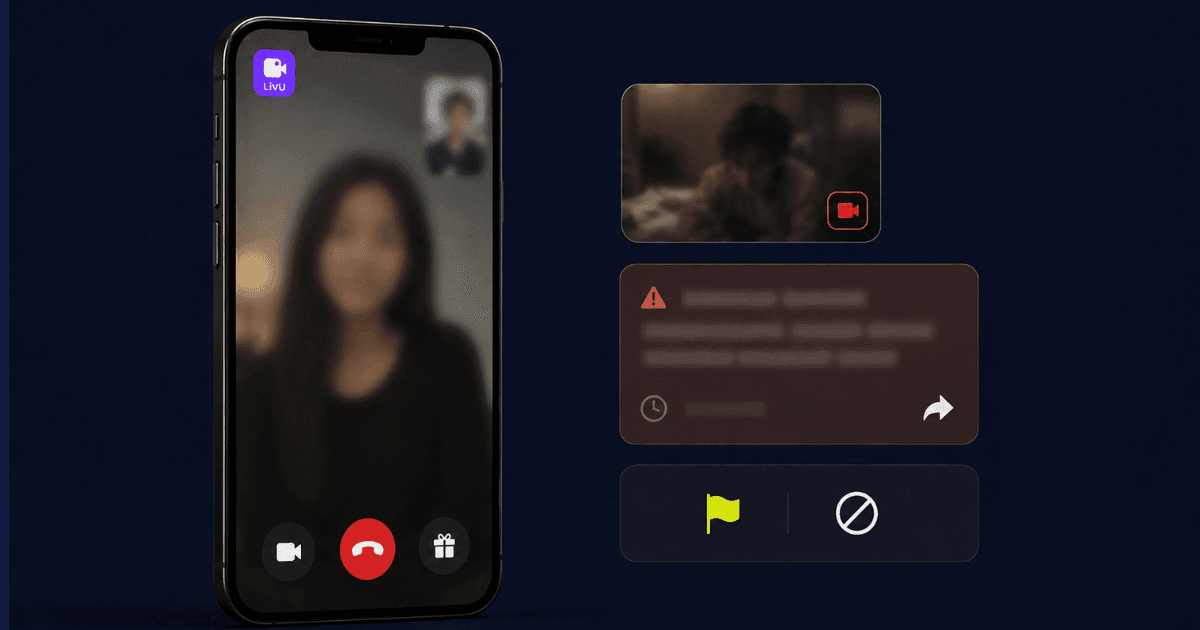
LivU blackmail usually starts the same way: a random video-chat app connects you with strangers in seconds, and that same speed is exactly what makes it a favorite tool for people running this scheme. If someone recorded a video call with you and is now threatening to share it unless you pay, you are dealing with a well-known scam that follows a predictable script, not something uniquely targeted at you. This guide explains how LivU blackmail works, the steps to take right away, why paying rarely helps, and how to report the threat and limit any content from spreading. None of what follows requires special technical knowledge, just a calm, deliberate approach.
How LivU and Video-Chat Blackmail Works
The pattern is remarkably consistent across random video-chat platforms. You match with an attractive stranger who seems interested and easy to talk to. The conversation quickly turns flirtatious, and the other person encourages you to undress or do something on camera. What you do not see is that they are recording the entire call. Moments later, the mood changes: they claim to have your video, they say they have found your friends or family, and they demand payment to keep it private.
Warning signs during the call
- A stranger who steers the conversation toward intimacy unusually fast
- Requests to move to WhatsApp, Telegram, or another app "for privacy"
- A camera that seems frozen, looped, or oddly angled (a sign of pre-recorded footage)
- Sudden claims that they already know your name, workplace, or contacts
- Threats and payment demands the instant the call ends
Recognizing these signs matters because it reframes what is happening. This is not a personal failing; it is an organized operation running the same routine on many people at once. LivU blackmail often follows the same pattern, and seeing that pattern early can make the situation feel less confusing and easier to manage.
Immediate Steps to Take
You do not need to solve everything in one moment. You need a few calm, deliberate actions that take away the blackmailer's leverage.
Do not pay
This is the single most important decision. Paying signals that you can be pressured, and in the large majority of cases the demands simply continue after the first payment. It is completely acceptable to stop the conversation immediately, even if you already replied once or twice.
Stop responding, but keep the thread
Do not negotiate, apologize, or try to reason with the person. At the same time, resist the urge to delete everything in a panic. Go silent while keeping the messages intact, since you will want that record. Silence is powerful here, because the entire scam depends on your fear and your continued engagement.
Slow the moment down
The countdowns and threats are engineered to make you act before you think. Put the phone down for a minute. Nothing they say requires an instant reply, and the sense of emergency almost always fades once you have a plan in front of you.
Preserve the Evidence
Before you block or delete anything, capture a clear record. It helps platforms and law enforcement, and it helps any specialist you may involve later. In video call blackmail cases, this documentation is especially important because the recording itself is the entire basis of the threat.
- Screenshot the profile, username, and any account or app ID
- Screenshot every threatening message and payment demand
- Note dates, times, and payment details (wallet addresses, payment tags, phone numbers)
- Save any recording or screenshot they sent you as "proof"
Store these in a private folder and back them up to a trusted email. If you are unsure whether they truly captured usable footage or are simply bluffing to scare you, the right response when a scammer has a video of you depends largely on whether there is credible evidence that the recording exists and whether the threat is continuing.
Need Expert Help?
Our team has resolved thousands of cases. Get confidential support now.
Lock Down Your Accounts
With evidence saved, tighten your digital footprint so the person loses access and reach. None of these steps take more than a few minutes, but together they close most of the doors a blackmailer relies on.
Reduce what they can find
- Set your social media accounts to private
- Limit who can see your friends and followers lists
- Review your public profiles for your full name, workplace, and location
- Be cautious about accepting new friend or follow requests during this period
Strengthen your logins
Change the passwords on your main accounts, especially any that share a password with the app or your email. Turn on two-step verification everywhere you can. This prevents the blackmailer from gaining any further foothold and reassures you that your accounts are yours alone.
Consider telling someone you trust
Much of the blackmailer's power comes from the fear that people close to you will find out. Quietly telling one trusted friend or family member first removes the surprise and takes the weapon out of their hands; once that fear is gone, much of what remains of the threat loses its force too.
Report the Threat
Reporting builds a formal record and can lead to the account being taken down, and it also helps platforms spot the same person operating across multiple profiles. This step matters even if you feel embarrassed or unsure whether anyone will act on it; platforms take repeated reports of the same pattern seriously, and each report adds to a growing case against the account.
Report inside the app
Use LivU's in-app reporting tools to flag the account for harassment, threats, or sharing private content. Be specific in the report if the option allows it; mentioning that money was demanded and that a recording was involved helps the platform prioritize the case correctly. Block the account after you have saved your evidence, not before, since blocking too early can sometimes cut off your access to the conversation history you need.
Report to law enforcement
Sextortion is a crime, and you are the victim. In the United States, file a report with the FBI through the Internet Crime Complaint Center at ic3.gov, and include the evidence you gathered. Outside the United States, contact your local police or national cybercrime unit. What you include when you report sextortion matters more than how polished the report sounds; the specific dates, usernames, and payment details carry the most weight.
Block the Content Before It Spreads
If intimate footage is involved, you can act proactively rather than waiting to see what the blackmailer does. This is one of the few steps you can take before anything actually spreads, which makes it worth doing even if you are not sure the person will follow through on their threat.
StopNCII is a free tool that creates a secure digital fingerprint, called a hash, of an image or video. Participating platforms use that hash to detect and block matching content if someone tries to upload it. The file itself never leaves your device; only the fingerprint is shared, so there is no risk of the image or video being exposed through the process itself. You can begin at stopncii.org. Setting this up takes only a few minutes, and it works quietly in the background regardless of what the blackmailer decides to do next.
Get Professional Help
LivU blackmail is not something you are expected to manage by yourself. It makes sense to bring in experienced help if the threats keep coming, if content has started to appear online, if the blackmailer is contacting your friends or family, or if the stress is simply too much to carry alone. Specialists who handle sextortion cases every day can move quickly, coordinate takedowns across platforms and search results, and help you decide on the right next steps, often catching details a first-time victim would not think to look for.
Above all, remember that this situation has a way out. The threats feel enormous in the moment, but they lose their grip the instant you stop feeding them. Save your evidence, secure your accounts, report the account, and get rid of blackmail with professional support if you want it. Taking these steps puts you back in control, and that is exactly where you belong, no matter how far things have already gone.
About the Author
Altahonos Team
The Altahonos Team consists of cybersecurity and online reputation management specialists with extensive experience in digital threat mitigation and content removal strategies, helping individuals and businesses protect their digital presence.
Related Resources
Trusted by Thousands

Based on 488+ verified reviews