
Blackmail on Streamable: How to Get the Video Down
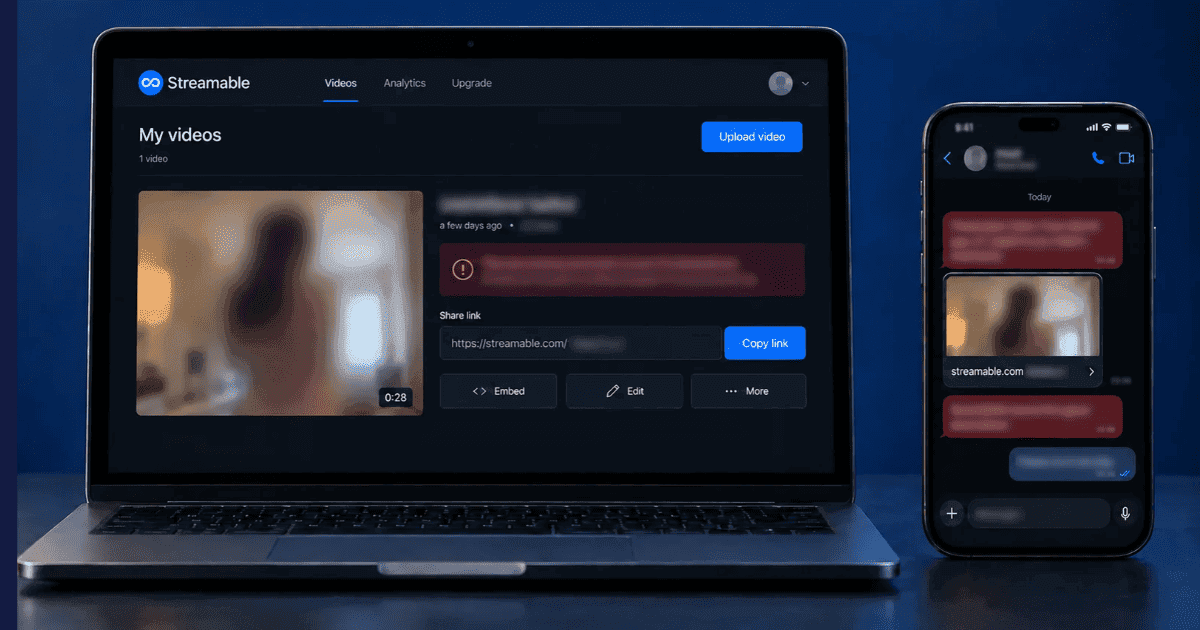
Blackmail on Streamable works differently from dating app blackmail because the platform is usually not where you met the person. Instead, it may be used to host a private video that someone threatens to share. The person uploads the footage, keeps it accessible through a direct link, and sends you the URL as proof before demanding payment. Although a link-only video may not be publicly listed, anyone who receives the link could potentially access it. This makes the threat feel immediate, even if the footage has not been widely shared. Understanding the difference between a hosted video and public exposure is important. This guide explains how to preserve evidence, report the video, request removal, and address potential reuploads.
How Streamable Links Are Used in Blackmail
In many sextortion cases, the threat begins with a claim that private footage will be shared. With Streamable blackmail, the person may send a working video link as proof that the material has been uploaded. Being able to access the footage can make the threat feel more immediate and convincing, even when there is no evidence that anyone else has viewed it.
A Hosted Video Is Not Necessarily Public
Streamable allows videos to be shared through direct links. A video set to “Link Only” may not appear in public listings, but anyone who obtains the URL could potentially view or forward it. This distinction matters because receiving a working link does not necessarily mean the video has already reached your friends, family, or a wider audience. However, limited visibility does not guarantee that the material will remain private. In Streamable blackmail, a working link may be used as a threat even when there is no clear evidence of wider distribution.
Why Removing One Link May Not End the Threat
The person making the threat may still have the original video saved on their device. Even if Streamable removes the uploaded copy, they could upload it again or share it through another service. This is why requesting removal and reporting the threatening behavior are separate but equally important steps. A successful takedown can restrict access to a particular upload, although it cannot guarantee that every copy has been eliminated.
First Steps After Receiving a Threatening Link
If someone sends you a Streamable link and threatens to share private footage unless you pay, focus on protecting yourself and preserving the available evidence. Avoid making decisions under pressure, especially when the person demands an immediate response.
Do not pay. Sending money does not guarantee that the video will be deleted or that the threats will stop. The person may retain a copy and demand further payments even after receiving the original amount.
Stop replying. Avoid negotiating, arguing, or asking the person to prove what they have. Continued communication can give them more opportunities to apply pressure or obtain additional information.
Preserve the evidence. Save the exact Streamable URL, threatening messages, timestamps, sender's account details, and any payment information. If the video is accessible and safe to document, record the page address and relevant details without downloading or redistributing the footage. Keep original messages and screenshots wherever possible.
Report the video to Streamable. Use the platform's reporting options to identify the video and explain that it contains private material shared or threatened to be shared without consent. Include the exact URL and relevant context. Reporting the upload may help restrict access, although removal is not guaranteed.
Consider reporting to law enforcement. Preserve your records and contact the appropriate authorities, particularly if the threats involve demands for money, stalking, or risks to your personal safety. Formally reporting blackmail can help document the threats and provide authorities with relevant evidence. The existence of a private video does not give another person the right to use it for extortion.
If the threatening link appears suspicious, avoid opening it solely to confirm the person's claims. The URL and messages can still be useful evidence when submitting a report.
Need Expert Help?
Our team has resolved thousands of cases. Get confidential support now.
Reporting and Removing the Video from Streamable
Removing a private video uploaded to Streamable without your consent involves more than deleting a single link. The immediate priority is reporting the hosted footage, but you may also need to address copies on other platforms or search engine results if the material has spread.
Report the Video to Streamable
Submit a complaint through Streamable's official content reporting form. Include the exact video URL and explain that the footage was uploaded without your consent or is being used to threaten you. Provide relevant details about the threats without unnecessarily redistributing the video. Streamable may review the report and remove or restrict access to content that violates its policies, although the outcome is not guaranteed.
Address Reuploads on Other Platforms
Even after Streamable removes a video, the person responsible may still have a copy and upload it elsewhere. If you discover additional copies, document their URLs and submit separate removal requests to the platforms hosting them. Keeping track of reported links and their outcomes can help you identify content that remains accessible or reappears later.
Remove Search Results When Necessary
If the video or a page containing it appears in search engine results, removing the hosted content may not immediately remove its listing. You can request removal or updating of outdated results through the relevant search engine. Where the material remains accessible on other websites, those copies may require separate content removal requests. Search engine delisting can reduce visibility but does not delete the original files.
Blackmail Involving an Ex-Partner
Streamable blackmail may involve a former partner who originally received private footage with your consent but later uses it to threaten you. Having permission to view or possess a video does not automatically give someone permission to publish it or use it for extortion. If the footage is shared without consent, pursuing revenge porn removal can help address unauthorized copies and limit further exposure. The immediate steps remain the same: preserve the threats, avoid paying, and report any unauthorized uploads.
If the threats come from a former partner, consider whether protective measures are available under your local laws. Specialist domestic abuse services can also help assess risks involving shared accounts, passwords, or device access before you make changes that could affect your safety. The National Domestic Violence Hotline provides safety planning resources for people experiencing abuse in the United States.
If the person responsible is outside your country, you can still report the threats to your local law enforcement authorities. Cross-border investigations may involve cooperation between agencies, depending on the circumstances and jurisdiction. Even when the person's location is unknown, preserving the Streamable URL, account details, and threatening messages can support a formal report.
Taking Action Against Streamable Blackmail
Blackmail on Streamable often relies on a video link that makes the threat feel immediate, but a hosted video does not necessarily mean the footage has been widely shared. Preserve the Streamable URL, threatening messages, and relevant account details before they disappear. Avoid sending money or continuing negotiations, report the unauthorized upload to Streamable, and consider reporting the threats to law enforcement. If the video has already spread, begin requesting removal from other platforms and monitoring for potential reuploads.
If the threats continue or you need help removing private footage shared without your consent, the Altahonos team can help you evaluate your options. Get professional support to stop blackmail and explore steps for coordinating takedown requests, monitoring reuploads, and reducing the video's online visibility. Altahonos is not a law firm, and this article does not constitute legal advice.
About the Author
Altahonos Team
The Altahonos Team consists of cybersecurity and online reputation management specialists with extensive experience in digital threat mitigation and content removal strategies, helping individuals and businesses protect their digital presence.
Related Resources
Trusted by Thousands

Based on 644+ verified reviews