

Emotional Blackmail vs Criminal Blackmail: Key Differences and What to Do
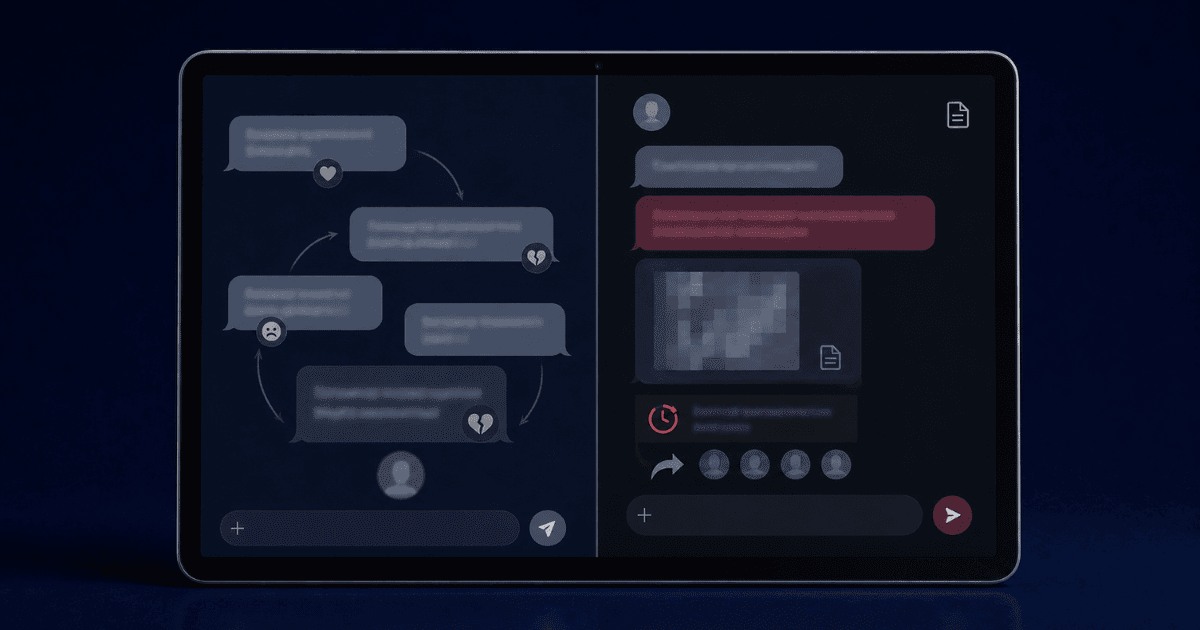
Emotional blackmail and criminal blackmail get used to describe two very different experiences, and mixing them up can lead you to the wrong response. One is a painful pattern inside a personal relationship, where someone uses guilt or fear to get their way over time. The other is a crime, where a person makes a demand and backs it with a threat to expose private images or information, often to someone they barely know. Understanding which situation you are actually facing matters more than it might seem, because the right response looks completely different for each, and treating one like the other can leave you more exposed rather than less. This guide explains both, shows where one can cross into the other, and outlines practical steps for each.
What Emotional Blackmail Really Means
Emotional blackmail is a form of manipulation that shows up in close relationships: partners, family members, friends, or coworkers. The person applying pressure uses your feelings against you to control a decision or an outcome. It rarely involves an explicit demand for money or images. Instead, it works through emotional leverage that builds up over time.
A common way to describe the mechanics is through guilt, fear, and obligation:
- Guilt: "After everything I have done for you, you owe me this."
- Fear: "If you leave, you will regret it and end up alone."
- Obligation: "A good partner would never even ask about this."
The goal is to make you feel responsible for the other person's emotions, so you give in to keep the peace. Over time, this can erode your confidence and make it hard to tell what you actually want, which is why responding to emotional blackmail often starts with rebuilding boundaries and creating space before making decisions. Emotional blackmail is harmful and worth taking seriously, but on its own it is usually a relationship and boundary problem rather than a criminal act.
Signs You May Be Experiencing It
- You often apologize for things that are not your fault.
- Saying "no" leads to punishment through silence, anger, or withdrawal.
- You change your plans mainly to avoid someone's reaction.
- You feel a constant low level of anxiety about disappointing one person.
What Criminal Blackmail Means
Criminal blackmail, often called extortion in law, is different in nature. It involves an unlawful demand backed by a threat. The classic pattern online looks like this: someone claims to have private photos, messages, or personal information, and they threaten to release it to your family, employer, or the public unless you pay money or do what they say.
The defining feature is the exchange being forced on you: comply, or the threat is carried out. This is not about hurt feelings within a relationship. It is a deliberate attempt to coerce you through fear of exposure. Sextortion, where the threat involves intimate images, is a well-known example, and it frequently targets people who met someone online. In cases like these, dealing with blackmail usually starts with preserving evidence, avoiding payment, and limiting further contact.
Common Features of Criminal Blackmail
- A clear demand, usually for money, more images, or a specific action.
- A threat of harm if you do not comply, such as exposure or reputational damage.
- Pressure to act fast, often with deadlines meant to stop you thinking clearly.
- Contact from someone you may not know well, frequently through social media or messaging apps.
The Key Differences at a Glance
The two situations overlap in the word "blackmail," but they differ in important ways:
- Relationship: Emotional blackmail happens inside a bond you already have. Criminal blackmail often involves a stranger or a distant acquaintance.
- The demand: Emotional blackmail seeks compliance and closeness. Criminal blackmail seeks a concrete payoff backed by a threat.
- The pressure: Emotional blackmail leans on guilt and obligation. Criminal blackmail leans on fear of exposure.
- The response: Emotional blackmail calls for boundaries and support. Criminal blackmail calls for evidence, caution, and reporting.
Naming your situation accurately helps you choose the response that actually protects you.
Need Expert Help?
Our team has resolved thousands of cases. Get confidential support now.
When Emotional Manipulation Crosses a Line
The two categories are not always neatly separated. Emotional manipulation can move into criminal territory the moment a specific threat attaches to a demand. Consider a partner who says, during an argument, "If you break up with me, I will send your private photos to your parents." That sentence changes the situation. It is no longer only about guilt or obligation. It is a threat to expose private material in order to control your choice, which is the core of criminal blackmail.
Warning signs that a personal conflict may be shifting include:
- Someone starts referencing private images, messages, or secrets as leverage.
- A vague emotional argument turns into an explicit "do this or else."
- The person demands money, not just attention or forgiveness.
- Threats continue even after the relationship has clearly ended.
If you notice these signs, the situation deserves the same seriousness as any direct threat, since this is exactly the point where stopping blackmail becomes the more urgent priority over managing the relationship itself.
What to Do in Each Situation
If You Are Facing Emotional Blackmail
Focus on boundaries and support rather than confrontation about crime, because usually no crime has occurred. Start by naming the pattern to yourself, since recognizing manipulation for what it is often reduces its power immediately; it stops feeling like a personal failing and starts looking like a tactic. From there, set clear, calm boundaries: state what you will and will not do, and hold to it even when the other person reacts with silence, anger, or renewed pressure. You do not have to resolve an emotionally charged demand on the spot, and giving yourself time is not the same as avoiding the issue.
Leaning on trusted people, friends, family, or a counselor, helps you see the situation with more distance than you can manage alone, since manipulation tends to distort your own read of what's reasonable. A therapist experienced with relationship dynamics can be genuinely useful here, particularly when the pattern has been going on long enough that it's hard to remember what a relationship without it felt like.
If You Are Facing Criminal Blackmail
Here the priorities shift entirely: evidence, caution, and reporting. Do not pay and do not send more images, since paying rarely ends the demands and almost always invites more. Stop engaging with the person directly; arguing, negotiating, or explaining yourself gives them more to work with, not less. Preserve every piece of evidence, messages, usernames, profile links, and transaction details, before you block anyone, and only block once that evidence is secured.
Reporting matters even when it doesn't feel like it will change anything immediately; contacting the relevant authorities creates the record that later action depends on. Specialist help can also make a real difference in these cases, since trained resolution teams have handled the pattern before and can help contain the situation while you focus on your own safety and privacy.
Professional Help for Blackmail Situations
Whether you are dealing with a manipulative relationship or a direct criminal threat, the situation is not your fault, and you do not have to handle it alone. Emotional blackmail asks you to reclaim your boundaries and your sense of self; criminal blackmail asks you to stay calm, protect the evidence, and reach out to people who can act. In both cases, the strongest move is the same: stop carrying it in silence.
Specialist teams handle criminal blackmail and sextortion cases every day, helping victims preserve evidence, coordinate reporting, remove harmful content, and respond without escalating the situation. If the threat feels immediate, contacting a blackmail helpline can help you assess the situation and decide what to do next without facing it alone.
About the Author
Altahonos Team
The Altahonos Team consists of cybersecurity and online reputation management specialists with extensive experience in digital threat mitigation and content removal strategies, helping individuals and businesses protect their digital presence.
Related Resources
Trusted by Thousands

Based on 443+ verified reviews