
Escort Blackmailing You? Discreet Response Guide
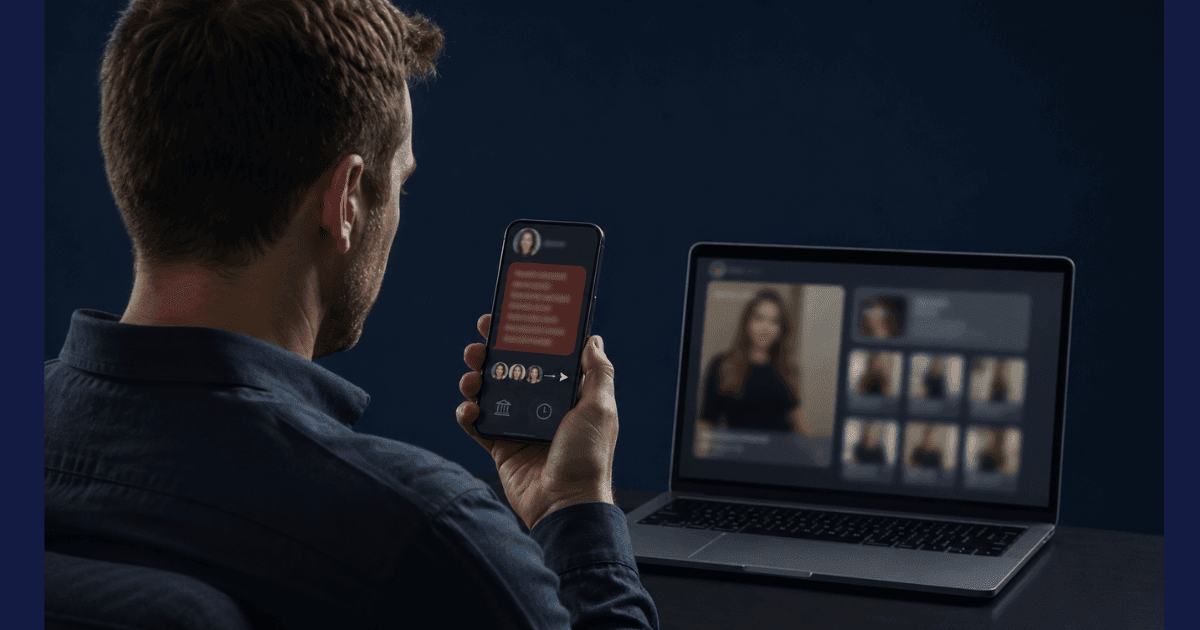
Escort blackmail cases share a particular structure that distinguishes them from other extortion patterns. The attacker has real material or claims to, whether booking records, screenshots, photos, or the ability to expose the encounter to specific people the victim knows. Because the underlying activity involves personal privacy that most victims want protected, response must combine speed with discretion, since the wrong move can expose the situation faster than the blackmailer ever could. This guide covers exactly what to do if an escort, or someone claiming to be one, is blackmailing you, from the first response through longer-horizon reputation protection.
Understand How Escort Blackmail Works
Escort blackmail cases usually follow one of three operational patterns, and identifying which one applies determines the correct response. The most common serious case involves an actual booking, where the blackmailer captured photos, recorded audio, or has other identifying details from the encounter and threatens to share them with a spouse, employer, or the public; these cases require careful evidence work because the material is genuine.
Some cases are engineered from the start: a supposed escort is actually part of a team that captures material and monetizes it as extortion, often through prearranged photography or a recorded video call built into the setup. A third pattern involves someone claiming to be an escort with no actual connection to the target, often a scammer who obtained the target's contact information from a leaked customer list or a compromised booking site; the claim may or may not be backed by real material, and figuring out which of these three patterns you're facing is what actually calibrates the right response.
Immediate Response in the First Hour
Discretion and evidence come first. Do not act on impulse.
- Do Not Pay Under Any Circumstances: Payment confirms viability. Paying victims are added to resell lists and often receive follow-up demands from the same operator or others who purchased the target's information; the first real step to get rid of blackmail is refusing to pay at all, since non-payment is the strongest immediate signal you can send.
- Do Not Reply Emotionally: Attackers use replies to gather information, including how afraid you are, what specifics you accept as real, and what negotiation posture you take. Silence combined with evidence preservation is correct.
- Preserve All Communication Before Blocking: Screenshot every message, the sender's profile if visible, any photos or transcripts offered as proof, payment demands including exact wallet addresses or receiver names, and timestamps; photograph the screen with a second device where evidence is critical, since this protects against account issues later.
Assess What Material Actually Exists
The response varies substantially depending on whether the threat is backed by real material. If the attacker sent a specific photo, transcript, or booking detail as proof, examine it carefully: is the photo from the encounter or reused from a public source, does the transcript quote things you actually said or generic filler, is the booking detail specific enough to be real? Many cases turn out to be bluffs backed by recycled content.
If the language of the threat, the payment method, and the timing pattern resemble what you can find in online search results for similar demands, you're likely dealing with an operator template rather than a specific personal grievance, and templated cases are usually bluffs. If the material is genuine but the person threatening you doesn't seem to be the person from the encounter, someone else likely obtained it through a third-party leak, hack, or shared access; identifying which of these situations applies, including whether the blackmailer is bluffing or working from real material, directly affects the removal and reporting workflow that comes next.
Need Expert Help?
Our team has resolved thousands of cases. Get confidential support now.
Secure Your Accounts and Reduce Exposure
Every escort blackmail case involves at least one adjacent digital exposure, whether a leaked email address, a reused password, or a public phone number, so fix those. If the extortion message references any specific account, treat that account as compromised and rotate it, extending the rotation to any account sharing the same password, since credential-based lateral movement is the most common escalation. Enable two-factor authentication with an authenticator app everywhere, since it blocks the majority of account-takeover follow-ups; SMS is vulnerable to SIM-swap and should be replaced when possible. Finally, audit whether your phone number, email, or workplace was findable online through data brokers, since that's likely how the attacker constructed the threat list, and a data-broker removal reduces future targeting materially.
Report Discreetly
Knowing how to report blackmail without exposing your own identity is what makes discretion and accountability possible at the same time.
File With FBI IC3
The FBI Internet Crime Complaint Center handles sextortion and cyber-enabled extortion cases including those involving adult services. IC3 filings do not become public and do not require you to identify the underlying activity beyond the extortion facts.
Consider a Local Report
Local police reporting varies by jurisdiction in how it handles cases involving adult services. In some places, a report can be filed on the extortion facts without disclosing the underlying encounter. Consult a specialist team or attorney if the local reporting environment is uncertain.
For Complex Cases, Consider Legal Counsel
Cases involving spouses, employers, or public professional stakes benefit from attorney involvement in the reporting decision. An attorney can advise on how disclosure would work under your jurisdiction's laws and how to structure any parallel civil action.
Prepare Content Removal If Distribution Threatened
Speed matters if the attacker begins to distribute material. Preparation before distribution is much cheaper than reaction after.
Preemptively Submit to StopNCII
StopNCII.org allows victims to submit hashes of intimate content on their own devices, and partner platforms then block matching uploads automatically; submission is anonymous, and this kind of preemptive content removal works even before distribution has started.
Map Likely Distribution Channels
Attackers targeting a specific person usually threaten specific channels, a spouse's email, an employer's LinkedIn, a family member's Instagram. Preparing removal contacts and processes for those channels ahead of time saves hours.
Retain Specialist Support for Rapid Response
Cases with credible distribution threats benefit from specialist support that maintains direct escalation channels with major platforms. Removal that takes days through public forms often takes hours through specialist channels.
Get Professional Help for Escort Blackmail
Escort extortion combines emotional stakes with digital-forensic complexity and requires discretion at every step. Specialist teams review evidence privately, coordinate law-enforcement reporting on the extortion facts alone, manage any parallel content-removal work, and provide access to reputation-protection tools that most individual victims cannot access directly. Because these cases often involve spouses, employers, or professional communities, controlled disclosure, planned by you rather than forced by the attacker, is usually the single most effective intervention available.
If an escort is currently blackmailing you, do not pay, preserve every message, and assess honestly whether the threat is backed by real material before deciding how urgently to escalate. Reach out for coordinated response support once you've done that initial assessment; discreet response teams are available for cases requiring immediate action while protecting your identity and personal privacy throughout the process, and the sooner that coordination starts, the more of the response happens on your terms rather than the attacker's.
About the Author
Altahonos Team
The Altahonos Team consists of cybersecurity and online reputation management specialists with extensive experience in digital threat mitigation and content removal strategies, helping individuals and businesses protect their digital presence.
Related Resources
Trusted by Thousands

Based on 569+ verified reviews