
Bribery Scam Help
A caller claiming to be a government official or a stranger threatening to expose you unless you pay is a scam, and our specialist team delivers the rapid crisis response you need to address the situation calmly and take back control.


How Bribery Scams Trap Victims
Bribery scams work by pretending that authority, secrecy, or urgency are on the scammer's side. The person on the other end wants you scared, isolated, and paying before you have time to verify anything. Understanding the mechanics is the first step to shutting the scheme down.

A Real Official Will Never Demand Secret Payment
No legitimate government agency, court, or law enforcement officer collects fines, bail, or settlements through gift cards, cryptocurrency, wire transfers, or payment apps. If someone insists on secrecy and untraceable payment to make a legal problem disappear, you are dealing with a bribery scam, not an official.
Fake Authority Impersonation
Scammers pose as tax agents, customs officers, immigration officials, or police and claim you owe an overdue fine or must pay a fee to avoid arrest or deportation. They read fake badge or case numbers, spoof caller ID to show a real agency name, and pressure you to pay immediately so you never call the agency back to check.
Reverse Bribery and Entrapment Claims
In this version the scammer flips the script and accuses you of offering or accepting a bribe, then threatens to report you or leak fabricated evidence unless you pay to keep it quiet. This is extortion dressed up as a legal problem, and it works the same way as other online extortion schemes that pressure victims into silence and payment.
Spoofed Credentials and Untraceable Payment
To sell the illusion, scammers send official-looking emails, forged letterhead, or documents with real agency logos, and they always steer you toward payment methods that cannot be reversed or traced. Gift card codes read aloud over the phone, crypto wallet addresses, and same-day wire transfers are the tell: real fines are never collected this way.
The Demand Rarely Stops at One Payment
Once a victim pays a bribery scammer, the story changes. New fees, taxes, or penalties appear, each one framed as the last obstacle before the case is closed. The pressure is designed to keep money moving, which is why stepping back and getting professional help early matters more than meeting the next demand.
Get immediate helpWhy You Should Act Now
Bribery scams are built on speed and fear. The faster you interrupt the script and bring in help, the less leverage the scammer has and the sooner you can move from panic to a clear plan.
Time-Sensitive Pressure
The scammer's entire method depends on rushing you: a deadline before an arrest, a window before charges are filed, a countdown before your record is flagged. These deadlines are invented to stop you from thinking or verifying.
Acting quickly means acting on your terms, not theirs. A calm, informed response removes the urgency the scam relies on and gives you room to make good decisions.
Escalating Demands
A single payment almost never ends a bribery scam. Once you comply, the scammer treats you as a paying target and invents fresh fines, processing fees, or clearance charges to keep the money flowing.
Each payment signals that the scheme is working. Cutting it off early, with professional support, protects both your finances and your peace of mind before losses compound.
Contact and Exposure Risk
Many bribery scammers threaten to contact your employer, family, or professional licensing board, or to publish accusations that you took or offered a bribe. The threat of public shame is the real weapon, and it mirrors tactics used in online blackmail situations.
Responding early lets a specialist team help you prepare for these threats and address them professionally, so a scammer's words carry far less weight than they hope.
Psychological Toll
Being accused of a crime you did not commit, or threatened with arrest you did not earn, is deeply distressing. Victims often lose sleep, withdraw, and feel trapped between paying and facing exposure.
You do not have to carry this alone. Reaching out connects you with people who understand exactly how these scams operate and who will treat you with discretion and respect.
Every Hour of Silence Works in the Scammer's Favor
The longer a bribery scammer controls the conversation, the more confident and aggressive they become. Bringing in a specialist team early breaks that momentum, replaces fear with a plan, and puts a professional between you and the person making demands.
How Altahonos Helps You Resolve Bribery Scams
Altahonos is a digital reputation and online-threat resolution firm. Our specialist team has helped many people caught in authority-impersonation and extortion-adjacent scams move from crisis to resolution using calm, professional methods. Here is how we support you.
Immediate Crisis Response
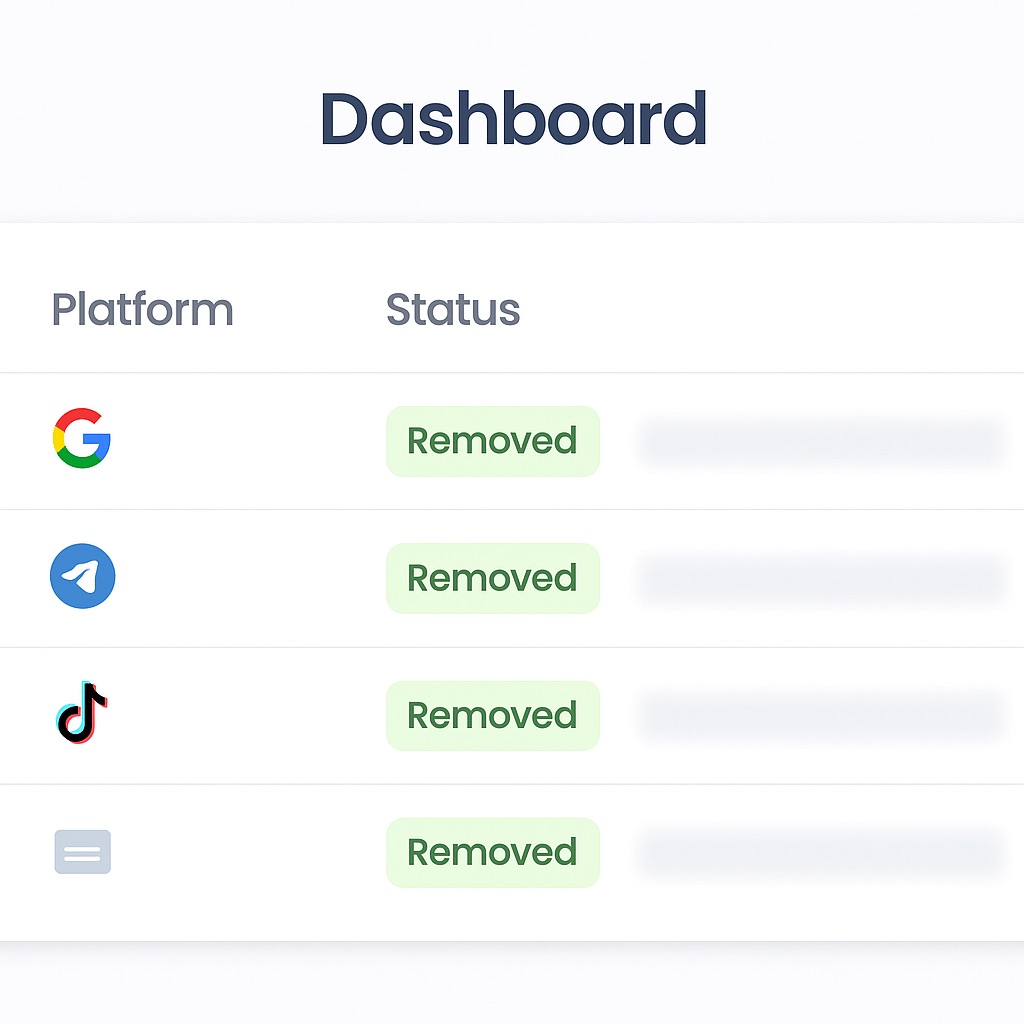
The moment you reach out, a resolution specialist helps you stabilize the situation: stop responding to the scammer, secure any evidence, and understand exactly what you are facing. You get clear, judgment-free guidance so your very next steps are the right ones, not reactions driven by fear.
Digital Threat Response
If the scammer is threatening to publish accusations or expose you online, our team assesses the risk and responds with professional methods to protect your name and reputation. We help you prepare for threatened postings and address harmful content the way we would in any blackmail response situation.
Evidence and Authority Coordination
We help you organize call logs, messages, payment records, and spoofed documents into a clear record, and we support you in working with authorities and reporting channels. If you are unsure where to start, our blackmail helpline can walk you through it and connect you with the right resources.
Account and Identity Security
Bribery scammers often gather personal details to make their story convincing, which can put your accounts and identity at risk. We help you lock down email, banking, and social profiles, review what information may have been exposed, and reduce the chance the same data is used against you again.
Our Response Process
A structured protocol that has helped resolve thousands of cases.
Crisis Assessment
Immediate threat evaluation and emergency protective measures implementation.
Threat Containment
Advanced monitoring and technical countermeasures to prevent content distribution.
Evidence Collection
Complete documentation and evidence preservation for law enforcement coordination.
Long-term Protection
Account security hardening and ongoing monitoring to help prevent future incidents.
A Committed, Strictly Confidential Partner
From your first message to full resolution, our specialist team handles your case with discretion and a genuine commitment to your outcome. You will never be judged for being targeted, and you will always know your next step. Reach out and let us help you resolve the situation.
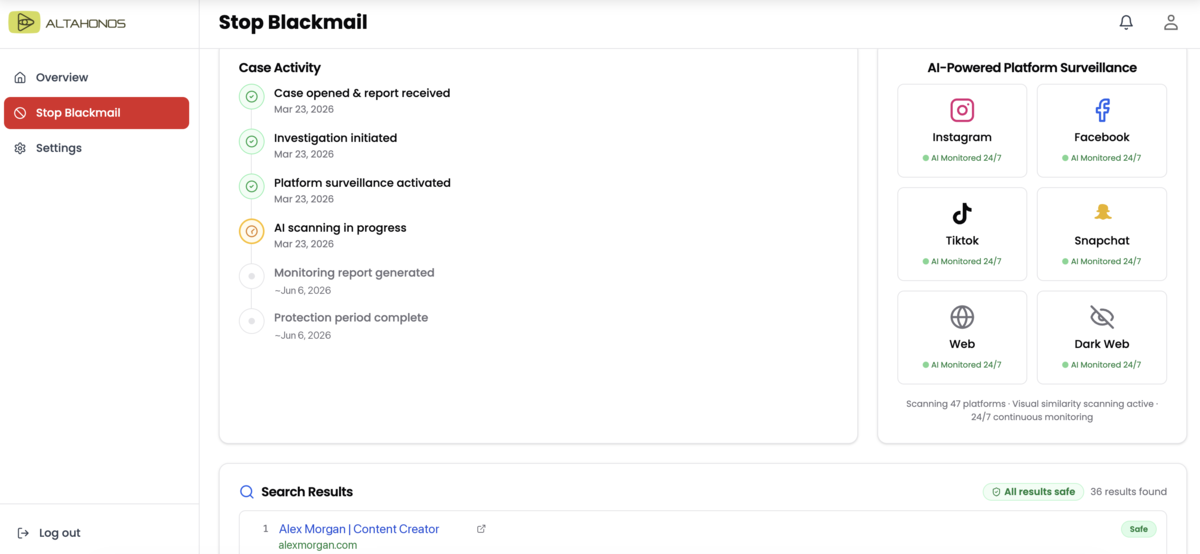
Get immediate helpBlackmail Protection Dashboard
Monitor your case activity, AI-powered platform surveillance, and search results in real time.
1 Million+
Infringements Detected and Removed
since 2015
High Success Rate
Across All Case Types
24/7
Real-Time Reputation Monitoring
What our clients say
Don't just take our word for it. See what our clients have to say about our content removal services.
Frequently Asked Questions About Bribery Scams
A bribery scam is a fraud in which someone uses the idea of a bribe, either demanding one or accusing you of one, to pressure you into paying. It usually takes one of two forms: a fake official who says a secret payment will make a fine, arrest, or legal problem go away, or a scammer who claims you offered or took a bribe and threatens exposure unless you pay. Both are illegal extortion schemes, and neither reflects how real agencies operate.
Almost certainly not. Real agencies do not call to collect fines through gift cards, cryptocurrency, wire transfers, or payment apps, and they do not threaten immediate arrest if you hang up to verify. Caller ID can be spoofed to show any agency name, so do not trust the number on your screen. Hang up, look up the agency's official contact information independently, and never pay based on a surprise call. If you are being pressured, our team can help you confirm what you are dealing with.
Yes. Many people reach out after making a payment, and it is still worth acting quickly. Stop any further payments immediately, contact your bank or the payment provider to report the transaction and ask about options, and change passwords on any accounts the scammer may know about. Then get professional help to manage any ongoing threats. Paying once does not mean you have to keep paying, and it does not mean the situation cannot improve.
They invest heavily in appearances. Scammers spoof caller ID, use real agency names and logos, cite fake badge or case numbers, and send emails or documents on convincing letterhead. Some even provide a fake supervisor or a second official to reinforce the story. None of this is proof of anything: forged documents and spoofed numbers are easy to produce. The reliable test is the payment method and the secrecy demand, which real officials never use.
Yes. Reporting helps protect you and others, even if you have not lost money. You can report to your local law enforcement and to national fraud reporting channels, and if a real agency was impersonated, that agency usually has an official channel to report the impersonation. Our team can help you assemble a clear record of the calls, messages, and payment demands so your report is organized and useful, and support you through the process.
No. Getting professional support does the opposite: it removes the scammer's biggest advantage, which is your isolation and fear. We help you stop reactive contact, respond in a calm and controlled way, and prepare for any threats the scammer makes. Scammers rely on victims feeling alone and panicked, and the moment you have experienced people guiding your response, their leverage shrinks.
Yes. Every case is handled in a strictly confidential manner. We understand that bribery scams often involve embarrassing accusations or fears about reputation, and we treat your information with discretion at every stage. You will not be judged for being targeted; these scams are engineered to fool careful, reasonable people, and reaching out for help is exactly the right move.
Treat any unexpected demand for secret or untraceable payment as a red flag, and verify independently before acting: hang up and call the agency using a number you look up yourself. Never share personal or financial details with an unsolicited caller, and be skeptical of urgency and threats. Tighten your account security and limit the personal information you share publicly. If a threat does surface, our team can help you address it and report it quickly.
Don't see your question here? Contact us for more information.