

Unknown Number, Real Threat: How We Shut It Down in 9 Hours.
Key Results
The Challenge
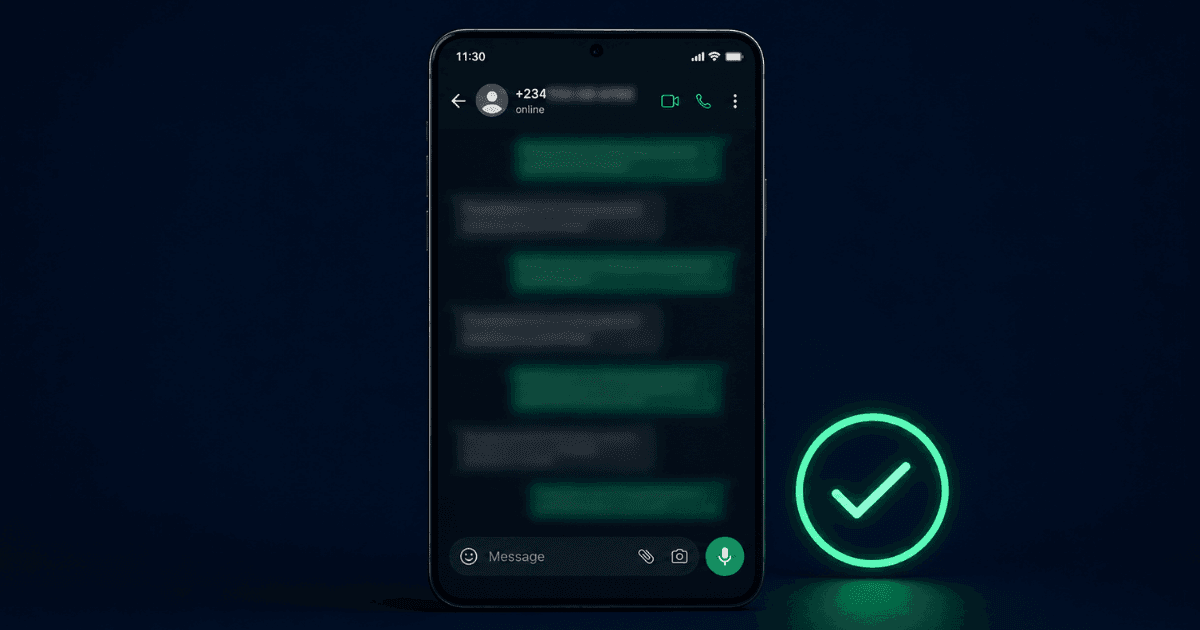
A 44-year-old construction firm owner received a WhatsApp message from a +234 number. Attached was a still frame from a business dinner two years prior showing him with alcohol and a table dancer. The message read: "I'll send this to your wife, your business partner, and 47 of your clients. $5,000. 24 hours." His personal and professional life were being threatened simultaneously.
Our Solution
Altahonos submitted a formal report through WhatsApp Business reporting channels. A content provenance analysis traced the likely source of the image to a venue security feed leak. The client was briefed on the fabricated montage defense and how to respond if the image reached anyone in his network.
The Message
A WhatsApp notification from a number he had never seen. +234. Nigeria.
He opened it. A still frame from a business dinner two years ago. Alcohol on the table. A dancer nearby. The image was grainy but recognizable.
The message that followed was precise: "I'll send this to your wife, your business partner, and 47 of your clients. $5,000. 24 hours."
A 44-year-old construction firm owner, he read it twice. The number was right there: 47 clients. Not a round figure. Not a vague threat. A specific number that suggested they knew exactly who was in his network.
The Weight of That Number
47 clients. His wife. His business partner.
The image itself was not the problem. It was an awkward moment from a dinner, nothing more. But in the wrong inbox, with the wrong caption attached, it could be presented as something it was not. His wife would have questions. His business partner would have questions. His clients would wonder.
He thought about paying. $5,000 was not small, but it was manageable. And maybe it would end there.
He stopped himself. Maybe it would not end there. He called Altahonos.
How These Threats Actually Work
A +234 country code belongs to Nigeria. Messages from these numbers are almost never individually targeted. Organized groups purchase lists of phone numbers and matching personal details scraped from LinkedIn, company websites, and social media. The same message, slightly customized, goes to hundreds of people simultaneously.
The "47 clients" figure was not evidence of deep access. It was a number pulled from a publicly available source, or an estimate designed to feel specific. The personalization is engineered to make the target believe the attacker knows more than they do.
The image itself told a clearer story. A still frame from a business dinner two years ago, grainy, shot from an angle consistent with a venue security camera. He had not shared that image with anyone. The most likely source was a security feed leak from the venue itself.
This mattered. Because if the image came from a leaked security feed, the attacker had no ongoing access to his life. They had one image, one moment, and a list of phone numbers.
Need Expert Help?
Our team has resolved thousands of cases. Get confidential support now.
What We Did
A formal report was submitted through WhatsApp Business reporting channels. The account was flagged for extortion.
The content provenance was analyzed. The angle, the grain, the framing all pointed toward a venue camera rather than a personal device. This significantly weakened any claim that the attacker had direct access to his network or private accounts.
The client was briefed on the fabricated montage defense. If the image reached his wife, his partner, or any client, here is how to present it: the image is taken out of context, the source is almost certainly a venue security leak, and the sender is a known extortion operation targeting business owners from the same type of number. Having that explanation ready in advance is the difference between a panicked reaction and a controlled one.
Throughout the process, he was updated regularly. He knew exactly what had been done and what was in place.
Nine Hours Later
The attacker went silent. Nothing was sent to his wife. Nothing reached his business partner. None of his 47 clients received anything.
He paid nothing.
Why Foreign-Number WhatsApp Threats Are Usually Weaker Than They Look
The combination of a foreign number, a real photo, and a specific list of names is designed to feel targeted and credible. It almost never is.
The photo almost always comes from a public or semi-public source. The names almost always come from LinkedIn or a company website. The number itself is purchased in bulk. The threat is a formula applied to hundreds of people, not a targeted operation against one.
This does not make it easy to handle alone. Knowing the formula is one thing. Acting on that knowledge calmly, in the middle of a 24-hour countdown, is another.
Foreign-number WhatsApp threat? 5-min verification: +1 (855) 853-2415
"A number I had never seen before had a photo from two years ago and a list of people I work with. Altahonos showed me in minutes that the threat was far weaker than it looked."— Anonymous
Frequently Asked Questions
The image most likely came from a venue security camera feed that was leaked or accessed without authorization. This is one of the most common sources for this type of threat. The attacker did not have personal access to his accounts or devices.
Almost never. Numbers like "47 clients" are typically pulled from publicly available sources or estimated to sound specific. LinkedIn, company websites, and social media provide enough information to construct a convincing-sounding threat.
A prepared explanation for anyone who might receive the image: the context is misrepresented, the source is almost certainly a venue security leak, and the sender is a known extortion operation. Having this ready in advance prevents a panicked, uncoordinated response.
No. Payment confirms you are willing to comply under pressure. A second demand typically follows. In this case, nothing was paid and the attacker went silent within 9 hours.
About the Author
Altahonos Team
The Altahonos Team consists of cybersecurity and online reputation management specialists with extensive experience in digital threat mitigation and content removal strategies, helping individuals and businesses protect their digital presence.