
How to Avoid Sextortion in Singapore: Safety Guide
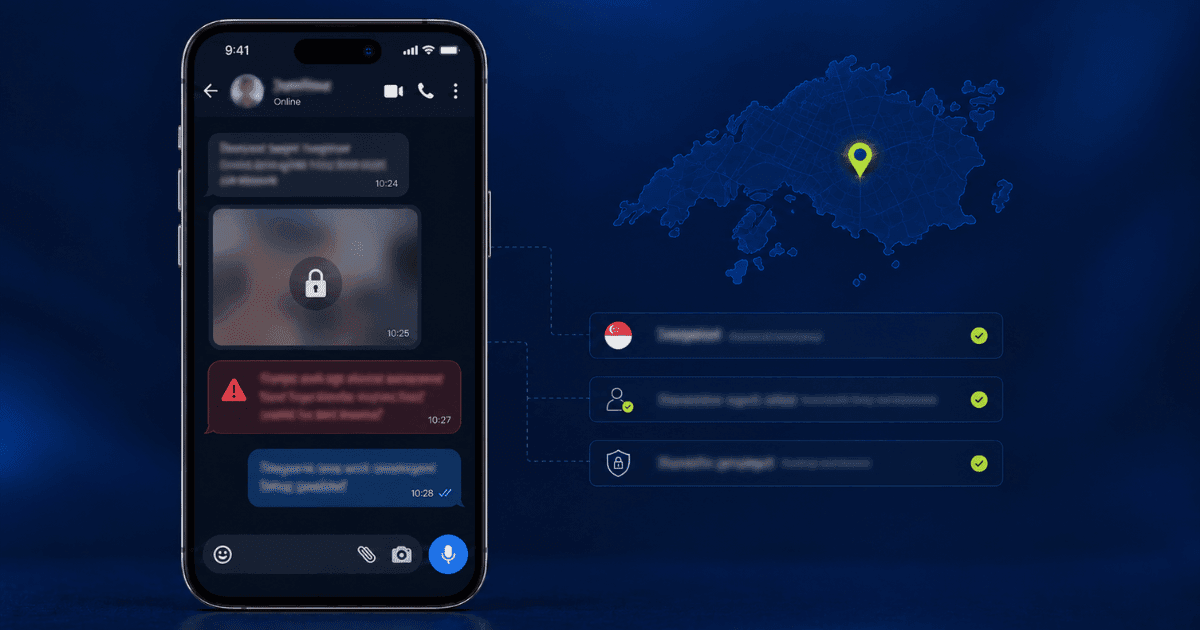
Knowing how to avoid sextortion in Singapore means recognising how the approach often uses local details to make the threat feel immediate and personal. Contact may begin on a dating app, social platform, or messaging service, with the person claiming to live, work, or study nearby. After moving the conversation to a private channel, they may request intimate content and threaten to share it with an employer, professional body, family member, or religious community unless you meet their demands. This specificity can give the threat particular force in a small, highly connected society, even when the information was gathered from publicly visible profiles. This guide explains how to recognise the approach early, reduce the person’s access to your contacts, preserve evidence, and use the appropriate reporting channels in Singapore if sextortion has already occurred.
How Sextortion Usually Develops in Singapore
How the Approach Usually Begins
Contact often begins on a dating app, social platform, or messaging service through an account containing plausible local details. The profile may suggest that the person lives, works, or studies in Singapore, which can make the approach feel more credible.
The conversation may become personal quickly before moving to a private messaging app. This transition can reduce the evidence and reporting options available on the original platform, particularly if the account is later deleted. A video call may then be proposed or intimate content requested, sometimes after the person sends an image or video first. That material may be stolen, prerecorded, or presented under a false identity.
After receiving intimate content, the person may change tone and begin making threats. They may send screenshots of your professional profile, friends list, workplace, school, or other information found through your online accounts. A payment demand often follows with a short deadline intended to create pressure and prevent careful decision-making.
Why Local Details Make the Threat Convincing
References to an employer, professional licence, family member, school, or religious community make the threat feel personally targeted and suggest that exposure could spread quickly. In many cases, however, these details come from publicly visible information rather than private access to your accounts.
A first name, clear photograph, workplace, school, or visible connection list may be enough to connect separate profiles. Understanding how this information was collected can reduce some of the pressure behind the threat. Although it may appear highly specific, the same method can be repeated against many people using details gathered from their public online presence.
What to Do in the First Hour
Break the Pressure Cycle
Stop responding and do not send money. A short deadline is intended to keep you focused on the demand instead of checking what the person can actually access. Do not ask for more time or try to negotiate. Preserve the conversation and follow the immediate steps to stop sextortion without revealing which employer, relative, or community contact concerns you most.
If You Have Already Sent Money
Contact your bank, payment service, or cryptocurrency exchange immediately and explain that the transaction was connected to extortion. Provide the amount, date, recipient details, and transaction reference, then ask whether a recall, dispute, or account restriction is available. Do not make another payment. Preserve every receipt and review the available options for recovering money after sextortion, as they depend on the payment method and transaction status.
Preserve the Cross-Platform Trail
Record the complete path of the approach before reporting or blocking the accounts:
- Screenshot the original profile and its stated Singapore location, workplace, or school
- Capture the full conversation on every platform with timestamps visible
- Save each username, profile URL, phone number, and display name
- Record wallet addresses, payment handles, bank details, and payment requests
- Note when the conversation moved away from the original platform
Keep the records in one secure folder. Avoid forwarding intimate material unnecessarily; preserve the messages and identifying details needed for platform and police reports.
Limit Access to the Named Contacts
Review the people and organisations mentioned in the threat. Hide friends and follower lists, remove public contact details, restrict messages on professional networks, and check what appears when your name, photograph, workplace, or school is searched. These changes cannot erase information already collected, but they can limit further access to the employer, relative, school, professional body, or community named in the messages.
Reporting Sextortion in Singapore
Report the Accounts and Preserve the Case
Report every account involved before blocking it, using the category that best describes the conduct, such as threats, extortion, harassment, or non-consensual intimate content. Include usernames, profile links, screenshots, payment details, and the messages containing the demand. Preserve the confirmation or reference number from each report so activity across different platforms can be connected to the same case.
Contact the Local Authorities
Make a police report through the official Singapore Police Force channels and provide the messages, usernames, payment details, and contacts named in the threat. ScamShield can also help check suspicious messages, numbers, or links. If money was transferred, contact your bank immediately. If anyone shown is under eighteen, state this clearly and do not forward the material.
If Content Has Been Shared
If the material is sent to an employer, family member, school, professional body, or religious community, ask the recipient not to forward it. Have them preserve the sender’s profile, message details, and delivery time before deleting the content. Record each recipient and platform involved so the distribution can be included in your platform and police reports. If the material is posted publicly or begins circulating across multiple platforms, professional content removal support can help coordinate reports and removal requests.
Need Expert Help?
Our team has resolved thousands of cases. Get confidential support now.
Reducing Exposure Going Forward
Reduce the amount of information an unfamiliar account can connect to your identity, workplace, and local community. Review what is visible across dating apps, social platforms, and professional networks rather than changing only the account where the approach began.
- Keep your employer and professional details off dating profiles
- Set follower and friends lists to private as a standing configuration
- Use dating photos that appear nowhere else, so an image search cannot connect them to your professional identity
- Treat an early push to another messaging app as a signal rather than a convenience
- Do not share intimate content with someone you have only recently met online, even if they send something first
- A live video call may help confirm who you are speaking with, but it does not prove their intentions
These precautions cannot prevent every deceptive approach, but they can reduce the personal information available to support a convincing threat. The same privacy habits also play an important role in avoiding becoming a victim of sextortion, especially when an approach begins on one platform and quickly moves somewhere more private.
Frequently Asked Questions
Where should I report this in Singapore?
Report every account involved to its platform under the threats or extortion category before blocking, and file with the police, who handle extortion as a criminal matter. Both matter, because the platform can remove the account and the police report creates the official record.Does being here on a work pass change anything?
It changes nothing about your ability to report, and that is often the fear the pressure relies on. Being the person who reported a crime is not a problem with your status.They know my employer and my neighbourhood. How?
Usually from what public profiles show, which in a small, well-connected market makes a threat feel more precise than it is. Reviewing what your profiles expose both answers the question and closes the gap.Is paying ever the pragmatic choice here?
No. A payment confirms a frightened person is on the other end, and demands typically continue rather than stop. Nothing about the local context changes that.What if the material involves another person as well?
Tell them early, before anyone else can. It is an uncomfortable conversation that gets harder with delay, and they need the chance to protect their own accounts.Taking Action Against Sextortion in Singapore
Knowing how to avoid sextortion in Singapore begins with recognising how public information, local connections, and urgent payment demands can be combined to create pressure. If a threat is already active, stop responding, refuse payment, preserve the accounts and messages, and restrict access to the people or organisations named by the sender. Report each account before blocking it, then provide the complete evidence trail to the appropriate local authorities.
Do not let a deadline prevent you from acting carefully. Even when content has been sent to someone you know, preserving delivery details and preventing further forwarding can help contain the situation. If you need professional assistance coordinating platform complaints, evidence, and next steps, you can get help reporting sextortion and determine the most appropriate response for your case.
About the Author
Altahonos Team
The Altahonos Team consists of cybersecurity and online reputation management specialists with extensive experience in digital threat mitigation and content removal strategies, helping individuals and businesses protect their digital presence.
Related Resources
Trusted by Thousands

Based on 587+ verified reviews