

How to Deal With Defamation on Social Media
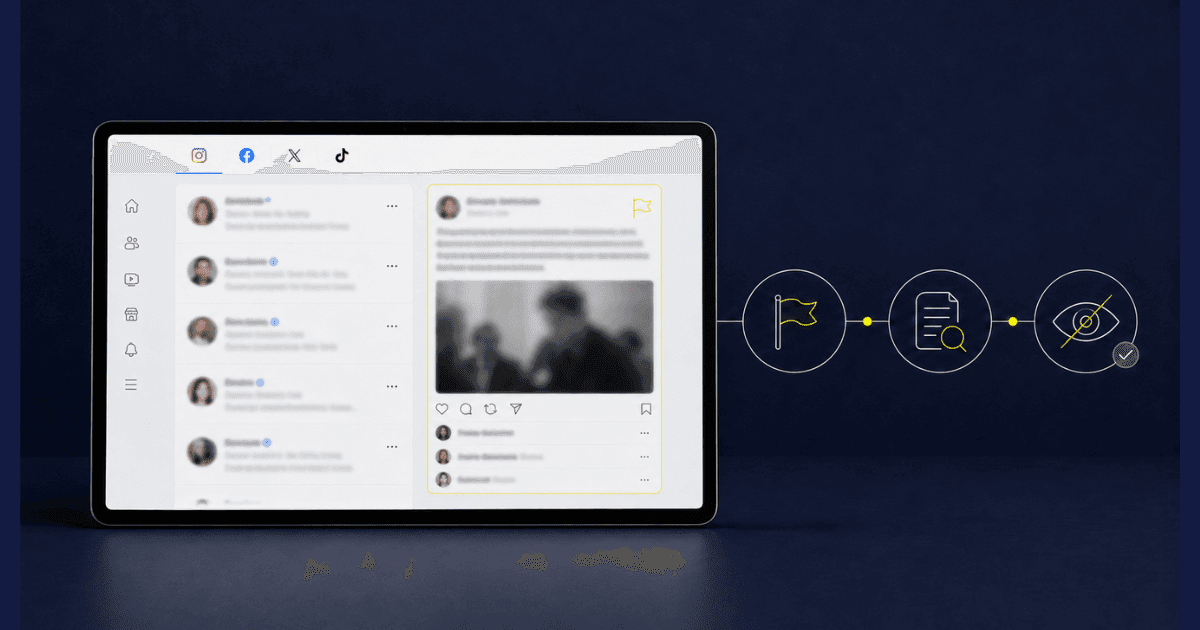
False claims spreading on social media are difficult in a specific way, because the same post that damages your name can keep circulating and reaching new people while you are still figuring out how to respond. Dealing with defamation on social media therefore involves two separate tasks: getting the specific false, factual claim taken down, and then addressing whatever has already spread before it stops spreading further. The two tasks call for different tools and different timing, and treating them as one problem usually means the content stays up longer than it needs to. This guide walks through how to tell a defamatory claim apart from an opinion, how to document it properly, how to report it on each platform, and what to do when the platform does not act.
How to Identify Defamation on Social Media
Not everything that feels like an attack is defamation, and the distinction matters before you report anything, because a platform or a lawyer will ask whether the post states a fact or voices an opinion. "This restaurant made me sick" is a factual claim someone can check, while "this restaurant is terrible" is an opinion, even when it stings just as much. Defamation requires a false statement of fact, presented as fact, that damages your reputation, so a harsh review, a rant, or an exaggerated insult usually falls outside what can be reported or pursued, no matter how unfair it feels.
Look for specific, checkable claims: an accusation of a crime, a false statement about your professional conduct, a fabricated quote, or a claim that something happened when it did not. If the post mixes opinion with a factual claim buried inside it, that factual claim is still what you act on, even if the rest of the post is just insults you have to ignore.
Document Before You Act
Content may be deleted, edited, or made private once the publisher notices your response. Before reporting the post or contacting the person responsible, preserve a clear record. This is especially important when dealing with defamation on social media, where the same claim may appear across several accounts. These records can support the later steps for dealing with defamatory content.
- Screenshots of each post, showing the account handle, timestamp, and engagement counts
- The direct URL of each post, saved as text
- Screenshots of comments and shares, particularly where others repeat the claim
- An archived copy through a web archiving service, which produces a timestamped third-party record
- Evidence that each factual claim is false, as documents rather than statements
- A record of the consequences: lost work, cancelled arrangements, messages you received
Keep everything in one secure folder and label each file with the platform and capture date. An archived copy can support your screenshots, but it should not replace them. Private accounts and pages requiring login may not be captured by public archiving services, so preserve those posts directly while you still have access.
Reporting on Each Platform
Many platform policies do not offer a standard defamation category. In these cases, removal may be possible when the content also breaches an existing policy.
Harassment and bullying applies where content targets an individual with sustained abuse, particularly across multiple posts. If the behaviour continues across several accounts, online harassment removal often starts with documenting the wider pattern so the related posts, profiles, and repeated conduct can be addressed together.
Privacy violations apply where the content discloses a home address, phone number, financial details, or identifying images. This route is often the most effective, because the test is factual rather than interpretive.
Impersonation applies where an account uses your name, image, or likeness to publish false statements. Report both the account and the individual posts so the platform can review the identity misuse alongside the content.
Coordinated behaviour applies where multiple accounts repeatedly amplify the same claim in a way that suggests organisation. Document the connections between the profiles, including shared wording, timing, and repeated posts.
Report the content under the strongest applicable category. If it may be unlawful in your country, use the platform’s legal removal process and identify each disputed statement clearly.
Need Expert Help?
Our team has resolved thousands of cases. Get confidential support now.
Do Not Respond in the Thread
This is the hardest advice to follow and the most important.
Replying publicly increases engagement, which increases distribution on every algorithmic feed. It supplies material for a follow-up post. It converts a one-sided claim into a visible dispute, which is worse for anyone searching your name later, because a dispute reads as unresolved while a single unanswered post often fades.
If a response is genuinely necessary, publish one brief factual statement on your own channel, without naming the person or linking to the content, and do not engage further. The Electronic Frontier Foundation maintains accessible material on how online speech and defamation interact, which is useful background before deciding how to respond publicly.
When the Platform Will Not Act
Platforms may decline defamation complaints because assessing whether a statement is true or false can require evidence they are not equipped to review. If a standard report does not work, several other routes remain.
Approach the Publisher
A direct, factual request to the person or site that published the claim may resolve the issue, particularly when it identifies the specific false statement and provides supporting evidence. Keep the request unemotional and avoid threats, which may make the publisher less willing to cooperate.
Take Legal Advice
Defamation law varies between jurisdictions, including who must prove truth or falsity, what limitation periods apply, and which remedies are available. For that reason, legal action should be discussed with a licensed lawyer in your country. The American Bar Association provides legal resources and referral options for US residents.
A formal legal notice may address the publisher directly when a platform report does not resolve the issue. Whether this is appropriate depends on the content, available evidence, and applicable law.
Work on the Search Layer
Content that remains online may still be addressed at the search level. Reducing its visibility can limit the practical harm when someone searches your name. This work can run alongside direct removal attempts as part of negative content removal, especially when the source itself cannot be taken down immediately.
If the problem involves sustained attacks from multiple accounts, document the pattern across profiles, report possible coordination, and monitor for new accounts or repeated claims. Keep one record of the usernames, posts, dates, and platform responses so the activity can be assessed as a connected campaign rather than a series of unrelated incidents.
Taking Action Against Defamation on Social Media
Dealing with defamation on social media requires a calm, evidence-based response focused on the false claims and how they are being distributed. Separate factual assertions from opinions, preserve screenshots and direct URLs before anything changes, and report the content under the strongest applicable platform policy. Avoid arguing in the comments, as public exchanges can draw more attention to the claim and create additional material that remains connected to your name.
If reporting does not resolve the issue, you can approach the publisher, seek advice from a licensed lawyer in your jurisdiction, and address the content’s visibility in search results. When false claims continue spreading or appear across multiple accounts, organized monitoring and removal requests may be necessary. Getting help with removing online defamation can make it easier to coordinate those requests and address the content across multiple platforms and search results.
About the Author
Altahonos Team
The Altahonos Team consists of cybersecurity and online reputation management specialists with extensive experience in digital threat mitigation and content removal strategies, helping individuals and businesses protect their digital presence.
Related Resources
Trusted by Thousands

Based on 488+ verified reviews