

How to Deal With Social Media Impersonation
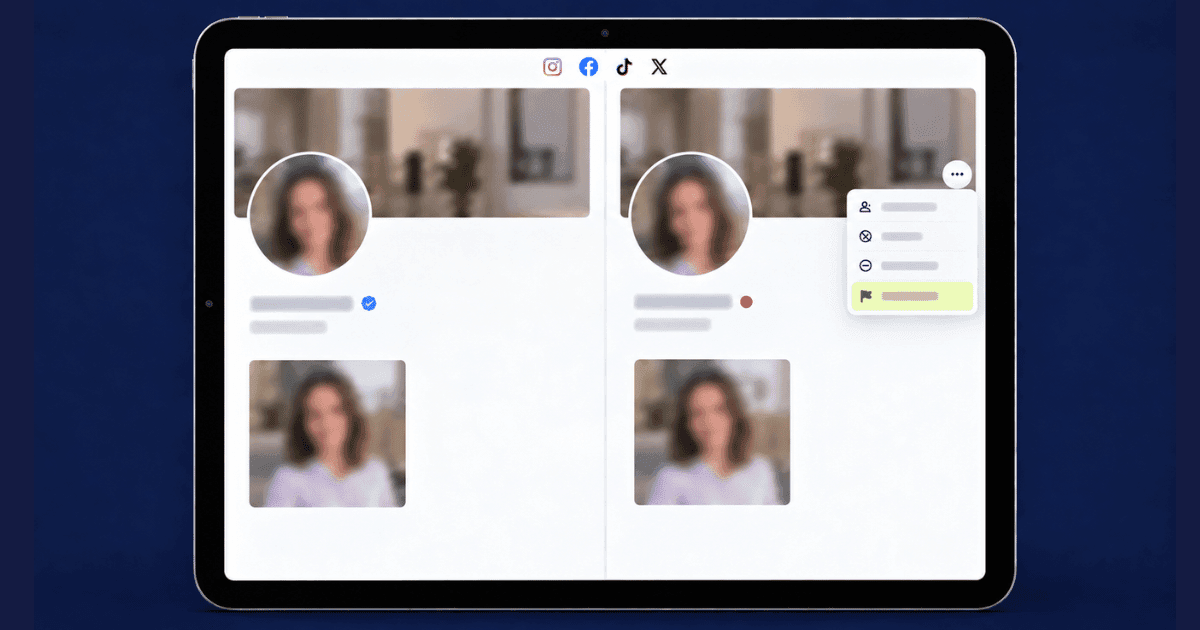
If you are trying to work out how to deal with social media impersonation, the first thing to understand is that the damage is being done in your voice, to people who trust you. Social media impersonation covers everything from a cloned profile messaging your friends for money to a fake business account collecting customer details, and the platforms treat each type differently depending on what the fake account is actually doing. Knowing which category yours falls into decides how quickly it comes down, and reporting it the wrong way can slow the whole process considerably. This guide covers how to document the fake account properly, which reporting route actually works on each major platform, how to protect the people being contacted while the report is pending, and what to do when removal alone is not enough to undo the damage.
The Three Types, and Why the Difference Matters
Platforms do not have one impersonation policy. They have several, and choosing the wrong one sends your report to the wrong queue.
Cloned personal profiles copy your photos, name, and bio, then send friend requests to your existing connections. The goal is usually a follow up message asking for money, a code, or a favour. These are handled under impersonation policies and are typically the fastest to remove, because the evidence is visual and obvious.
Fake accounts using your identity for another purpose use your name and face to run a scam, promote a product, or post content you would never post. These fall under impersonation as well, but often also under fraud or platform manipulation rules, and reporting them under both raises the priority.
Parody, commentary, or fan accounts are protected in most policies when clearly labelled. An unlabelled account that could be mistaken for you is not protected, and that distinction is where most disputed reports are won or lost.
There is a fourth category worth naming: accounts using manipulated images or synthetic video of you. Those are handled under separate rules and need a different approach, covered by dedicated deepfake content removal processes.
Document Before You Report
Once a platform removes an account, you usually lose access to everything on it, including the profile itself, the message history, and any comments it left elsewhere. That makes documentation a one time window rather than something you can go back and redo later, so it is worth treating as seriously as the report itself.
- The full profile URL and the account handle, written out as text rather than only in a screenshot
- Screenshots of the profile page showing the photos and bio alongside the follower count
- Screenshots of any posts or messages sent from the account
- Messages from contacts telling you they were approached, with their permission
- The date you became aware of it, and how
This record does two things. It supports an appeal if the first report is rejected, which happens more often than people expect, and it becomes the basis of a police report if the account has been used to take money from someone. Keep copies in more than one place, since a phone can be lost or reset in the middle of a dispute that takes weeks to resolve, and having nothing to fall back on at that point undoes the work you already did.
Reporting on Each Platform
Every major platform accepts impersonation reports even without an account there, through dedicated web forms built for this. This is usually the fastest part of working out how to deal with social media impersonation, since removal speed mostly comes down to how clearly the report proves which account is real: including identification and a direct comparison helps considerably, and if nothing has happened after a week, filing again is the right move.
Instagram and Facebook
Both use the same underlying system. Report from the fake profile itself, choosing the option that says the account is pretending to be someone, then select that it is pretending to be you. Meta will usually ask for a photo of government identification, and providing it materially speeds up the outcome.
If the account is impersonating you to reach your friends, ask two or three of them to report it as well from their accounts. Multiple independent reports move a case faster than one. The Meta Help Centre hosts the direct impersonation forms for both Instagram and Facebook, which can be used even without an account of your own on either platform.
X, LinkedIn and TikTok
X requires the report to be filed under impersonation specifically, and accepts reports from an authorised representative. LinkedIn treats fake professional profiles seriously because they are often used for recruitment fraud, and its reporting flow asks for your profile URL for comparison. TikTok's process is similar to Meta's and also asks for identification. For all three, include the detail that the account is contacting your real connections if that is happening. It moves the case from a passive policy question to an active harm question.
When the First Report Is Rejected
Rejections are common and are not the end. Reports usually fail because the reviewer could not confirm which account is real, so strengthen the second attempt with identification, the older account creation date, and proof the impersonator copied content that appeared on yours first. If a new account appears after the first is removed, report it too and reference the earlier removals, since a documented history supports both a stronger platform response and a police report.
Need Expert Help?
Our team has resolved thousands of cases. Get confidential support now.
Protect the People Being Contacted
Removal takes time, but warning your network takes minutes and prevents most of the actual harm. Post publicly from your real account, briefly and without drama, saying that an account using your name is not you and that you will never ask for money or verification codes by message, and pin it while the situation is live so anyone who comes across the fake account later sees it too.
Ask people who were contacted to report the account rather than engage with it, since arguing with it in comments only raises its visibility and gives it material to work with; messaging the fake account yourself is worth avoiding for the same reason, and it occasionally triggers retaliation against your contacts. If the fake account has already taken money from someone, they should report it to their own bank and to law enforcement, since their report carries more weight than yours because they are the financial victim. The US Federal Trade Commission's identity theft service is a useful next step when impersonation extends beyond social media into accounts or credit.
Beyond the Report: Repair and Prevention
When Removal Is Not the Whole Problem
Sometimes the account comes down but the damage stays behind it. Screenshots circulate elsewhere, a post gets quoted, or a search for your name still returns cached copies weeks later, so closing the original account was necessary but rarely enough on its own. At that point the work shifts from platform reporting to reputation repair: removing content from secondary sites that copied it, addressing search results that still surface the fake account, and rebuilding the accurate results that should appear first. Professional online harassment removal services handle this cross-platform stage as a coordinated effort, since the same content tends to resurface on a new host just as one copy comes down.
When the Content Involves False Statements
Where false statements were published in your name rather than your identity simply being copied, the situation shifts again. Removing online defamation may require a different approach than a standard impersonation report, since defamatory material and impersonation both stem from the same fake account but can follow entirely different reporting or legal channels once you try to act on them. Knowing which one you are actually dealing with determines which process is worth pursuing first.
Making Yourself Harder to Clone
Impersonation often depends on information that is already public, so reducing what others can easily copy makes your account harder to imitate. Setting your friends or followers list to private limits who a fake profile can reach, and reducing the number of high-quality photos available publicly gives impersonators less material to reuse. Claiming your name on platforms you do not use and getting verified where available also helps others tell your real account apart from a fake one. Watch for early warning signs too, such as friends mentioning a duplicate request. Celebrity impersonation scams can follow a different pattern, particularly when a fake profile exploits an existing public reputation.
Taking Action Now
If you are still working out how to deal with social media impersonation and an account is using your identity today, the order of operations matters: capture the profile URL, screenshots, and any messages before you report anything, since reporting first can cost you the evidence. Report under the impersonation category specifically, with identification attached where the platform allows it, and ask affected contacts to report it independently rather than relying on your report alone, since multiple reports move faster than one.
Post a short public notice from your real account so anyone contacted by the fake profile sees it quickly, and lock down your follower list to limit how easily another clone can identify people connected to you. What matters in the meantime is how quickly the people around you understand that the account is not yours. If the impersonation has started affecting search results, multiple platforms, or your wider digital presence, online reputation management can help coordinate the work needed to address those wider effects.
About the Author
Altahonos Team
The Altahonos Team consists of cybersecurity and online reputation management specialists with extensive experience in digital threat mitigation and content removal strategies, helping individuals and businesses protect their digital presence.
Related Resources
Trusted by Thousands

Based on 463+ verified reviews