

How to Remove Leaked Content Online
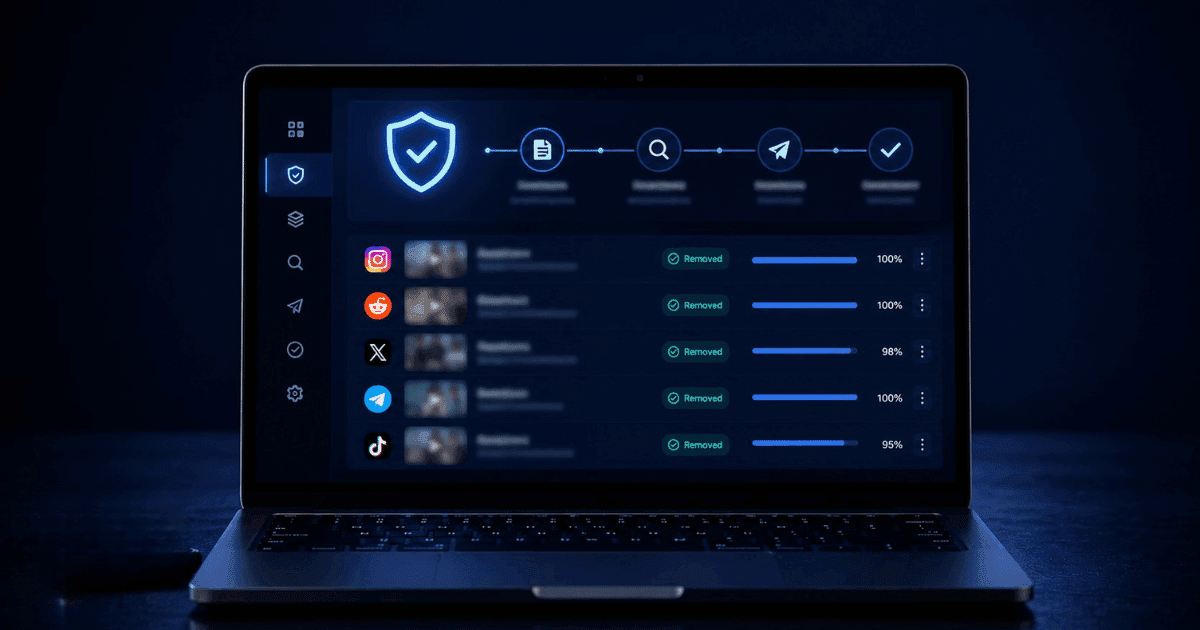
Knowing how to remove leaked content online quickly is the single most important factor in limiting long-term damage. Leaked content; private photos, videos, messages, documents, or recordings posted online without consent spreads quickly across platforms and search engines, often within hours. Removing it requires a coordinated, multi-channel approach that acts fast in the first 48 hours and continues monitoring for months afterward. This guide walks through the complete leaked content removal workflow used in thousands of successful cases, from comprehensive content identification through platform-level takedowns, hash-based prevention, legal action, and long-term monitoring.
How to Remove Leaked Content: Move Fast in the First 48 Hours
The speed of initial response determines the scope of the eventual cleanup. Content spread accelerates dramatically in the first 24 to 48 hours and then plateaus as the initial wave of sharing settles. Mirror sites quickly republish content from major sources, multiplying the number of locations that need takedown requests. Search engines index new pages within hours but de-index removed content far more slowly, creating a persistent visibility gap. Comprehensive removal action taken within the first 48 hours can prevent more than 70 percent of subsequent spread. After day three, removal shifts from a fast-moving sprint to a long-tail effort that can span weeks or months. Acting fast is the single highest-leverage protection available to anyone facing a leak.
Identify Every Location Comprehensively
Before submitting any removal requests, map the full scope of where the content has spread. Search your name, common identifiers, and any titles used for the leak across multiple search engines rather than relying on a single platform. Reverse-image-search any visual content using Google Lens, TinEye, or Yandex to catch copies that text searches miss. Check major platforms including Twitter, Reddit, Telegram, Discord, and image boards, since leaked content frequently moves across all of these within days. Search adult content sites directly if intimate content is involved, as these sites are common destinations. Check Pastebin and GitHub Gist for document leaks, and look at file-sharing services including MEGA, AnonFiles, and shared Google Drive links. Monitor social media for screenshots of the content being re-shared with commentary, since people often discuss leaks even after the original is removed. Document every URL, platform, upload date, and visible context in a single master tracker that becomes the foundation for your entire campaign.
Preserve Evidence Throughout
Even as you submit removal requests, preserving evidence remains essential and should never be skipped in the rush to take content down. Screenshot every URL showing the content before submitting a takedown, since the page may disappear once flagged. Record source URLs and direct content URLs separately, as platforms often require both for processing. Capture uploader profiles and any visible identifying information, along with timestamps and view counts that demonstrate the scope of spread. Generate SHA-256 file hashes of leaked files when accessible, which support both criminal cases and hash-based blocking tools. Preserve any communications with someone you suspect is the source, as this evidence supports criminal cases, civil actions, and platform escalations that may unfold over months.
Submit Platform-Specific Takedown Requests
Every major platform has removal flows. Submit on every applicable platform simultaneously.
- Google Search: Removal Request for personal/intimate content
- Meta (Facebook/Instagram): NCII or privacy complaint
- Twitter/X: Privacy violation, NCII, or copyright report
- Reddit: Privacy violation
- TikTok: Privacy or NCII report
- Telegram: Report channel or user via abuse@telegram.org
- Discord: Trust and Safety report
- Adult content sites: NCII forms (most major sites have priority queues)
- Image hosts: Imgur, ImgBB takedown requests
- Pastebin/GitHub: DMCA or terms violation reports
Each platform processes independently. Parallel submissions save days.
Use StopNCII for Hash-Based Auto-Blocking
StopNCII.org is one of the most powerful tools available for intimate content specifically. The original content stays entirely on your device throughout the process; only a hash, a unique digital fingerprint, is uploaded to the partner platform database. Partner platforms including Meta, TikTok, Bumble, OnlyFans, Pornhub, and Reddit automatically block matching uploads using this hash, catching re-uploads that manual human reporting could never keep pace with. Submitting hashes within hours of discovering a leak maximizes the tool's effectiveness, since it prevents future uploads rather than only removing existing ones.
File DMCA Notices
For content you own, including photos you took or videos you recorded yourself, DMCA notices significantly accelerate removal. Submit notices to the platform's designated DMCA agent, which every major platform is legally required to maintain. Submit to hosting providers directly when platforms refuse to act or are unresponsive. Submit to search engines separately to remove URLs from search results even after the underlying page is taken down. DMCA takedown service provides templates and handles complex cases where ownership or jurisdiction questions complicate the standard process. DMCA is particularly effective for US-based platforms, which must respond to maintain safe harbor protection under US copyright law.
Need Expert Help?
Our team has resolved thousands of cases. Get confidential support now.
Address Search Engine Visibility Separately
Removing the original content does not remove search engine results immediately, which makes search visibility a distinct problem requiring its own workflow. Submit URL removal requests to Google for pages that have already been taken down but remain indexed. Submit similar requests to Bing, Yandex, and DuckDuckGo, since each search engine maintains its own index and removal process. Request cache refreshes for content that has been removed at the source but still shows cached previews. Search result removal services handle stubborn cases where standard removal forms fail to clear cached or mirrored content. This parallel workflow is essential because search engines can continue indexing removed content for weeks after the original page disappears.
Engage Specialist Removal Services
Doing comprehensive leaked content removal alone is overwhelming given the number of platforms, the speed required, and the ongoing monitoring involved. Specialist services maintain direct escalation channels with platform trust and safety teams that produce faster results than standard public-facing report forms. Automated monitoring catches re-uploads and triggers automatic re-submission without requiring you to manually search every day. Cross-platform campaigns are submitted in parallel rather than sequentially, compressing what would take weeks into days. DMCA notices to hosting providers are filed when platforms themselves refuse to act. Unauthorized content removal and revenge porn removal services combine these capabilities with legal coordination for civil action when appropriate.
Pursue Legal Action
Legal action against the source of a leak provides both damages and a deterrent against repeat behavior. A civil suit can be filed for breach of privacy, intentional infliction of emotional distress, or copyright infringement depending on the specifics of the case. Criminal prosecution under NCII statutes is available in most jurisdictions for non-consensual intimate imagery specifically. Court orders compelling specific platform removal carry more weight than standard reports and often produce faster compliance. Cease and desist letters to known mirror sites resolve many cases without further escalation. Subpoenas can identify anonymous uploaders when a lawsuit has been filed, converting an anonymous threat into an identifiable defendant. Working with an attorney experienced in digital privacy significantly speeds the entire process.
File With Law Enforcement
For leaks involving criminal elements such as non-consensual intimate imagery, illegal information, or evidence of criminal conspiracy, law enforcement involvement is essential alongside civil remedies. US victims can file with the FBI IC3 for federal-level cases. UK victims should contact Action Fraud. Local police handle jurisdiction-specific crimes that fall outside federal scope, and most other countries maintain dedicated national cybercrime units. Criminal investigations create official legal records that support both civil action and platform escalation requests, since platforms often respond faster to documented law enforcement involvement.
Monitor for Reposts Long-Term
Initial removal represents only the first 48-hour effort; ongoing monitoring catches the long tail of reposts that inevitably follow. Set up Google Alerts for your name and identifying terms to catch new mentions automatically. Run quarterly reverse-image searches even after the initial campaign concludes, since content can resurface months later. Maintain StopNCII hash records over time rather than treating the submission as a one-time action. Subscription reputation monitoring provides ongoing surveillance across platforms for cases requiring sustained attention. Set up notifications for new posts specifically on platforms where the leak originally appeared, since those communities are statistically more likely to see resurfacing. Most professional cases include six to twelve months of active monitoring before being considered resolved.
Take Care of Your Mental Health
Leaks are traumatic regardless of the content involved, and recovery requires emotional support alongside the technical removal process. Trauma-informed therapy specifically addresses the unique psychological impact of having private content shared without consent. Connecting with survivor support groups provides community with others who understand the specific experience. Talking to a trusted friend or family member breaks the isolation that often compounds the difficulty of the situation. It is essential to recognize that the wrongdoer is whoever leaked the content, never the person whose privacy was violated. Many leak survivors have rebuilt their lives and reputations fully; the situation, while severe, is not permanent.
Take Action: Comprehensive Response Works
Removing leaked content online is a 48-hour intensive effort followed by months of monitoring. The combination of comprehensive identification, parallel platform submissions, hash-blocking, DMCA notices, legal action, and search engine cleanup produces real, measurable results. Specialist services exist because the workload across dozens of platforms and months of monitoring is genuinely significant for any individual to manage alone. Whether you are handling a single leak or coordinated distribution across multiple platforms, resources are available 24/7 for both DIY support and full-service removal. The shame belongs entirely to whoever leaked the content, never to you.
About the Author
Altahonos Team
The Altahonos Team consists of cybersecurity and online reputation management specialists with extensive experience in digital threat mitigation and content removal strategies, helping individuals and businesses protect their digital presence.
Related Resources
Trusted by Thousands

Based on 488+ verified reviews