

How to Report a Scammer on WhatsApp
Knowing how to report a scammer on WhatsApp matters more than ever, given the platform's massive global reach and minimal friction for account creation, which have made it one of the most common channels for scammers. They run fake romance schemes, investment fraud, employment scams, family impersonation, and sextortion operations using the platform's privacy features and global presence as cover. Effective reporting requires the in-app report, federal cybercrime filings, financial institution coordination, and sometimes specialist support. This guide walks through the complete workflow that successful WhatsApp scam reports follow.
Recognize Common WhatsApp Scam Patterns
WhatsApp scams cluster into a few major categories. Romance scams involve long-term emotional manipulation followed by money requests, while investment scams, often called pig butchering, lure victims into a fake crypto or stock trading platform. Family impersonation scams send urgent "I lost my phone, please send money" texts from what appears to be a relative, and employment scams offer fake jobs that require upfront fees before anything else happens. Sextortion follows a video call recorded without consent, phishing messages impersonate WhatsApp support to steal credentials, and two-step verification scams simply ask for the code sent to your phone, framed as routine "verification." Recognizing which pattern you're dealing with shapes exactly what evidence matters most, and many scams blend more than one category as they escalate.
Preserve Evidence and Report Through WhatsApp
Before blocking the scammer or deleting the conversation, preserve evidence: screenshot every message with timestamps and phone numbers visible, export the full chat using WhatsApp's built-in chat export feature, and capture the scammer's profile photo, displayed name, and phone number including country code. Save any payment information they sent, such as IBANs, crypto wallets, or account numbers, along with any voice messages or videos and any other accounts they mentioned. Save everything to cloud storage, a local backup, and ideally a printed packet as well, since relying on a single device risks losing everything if the scammer manages to trigger a remote wipe or the phone is otherwise lost.
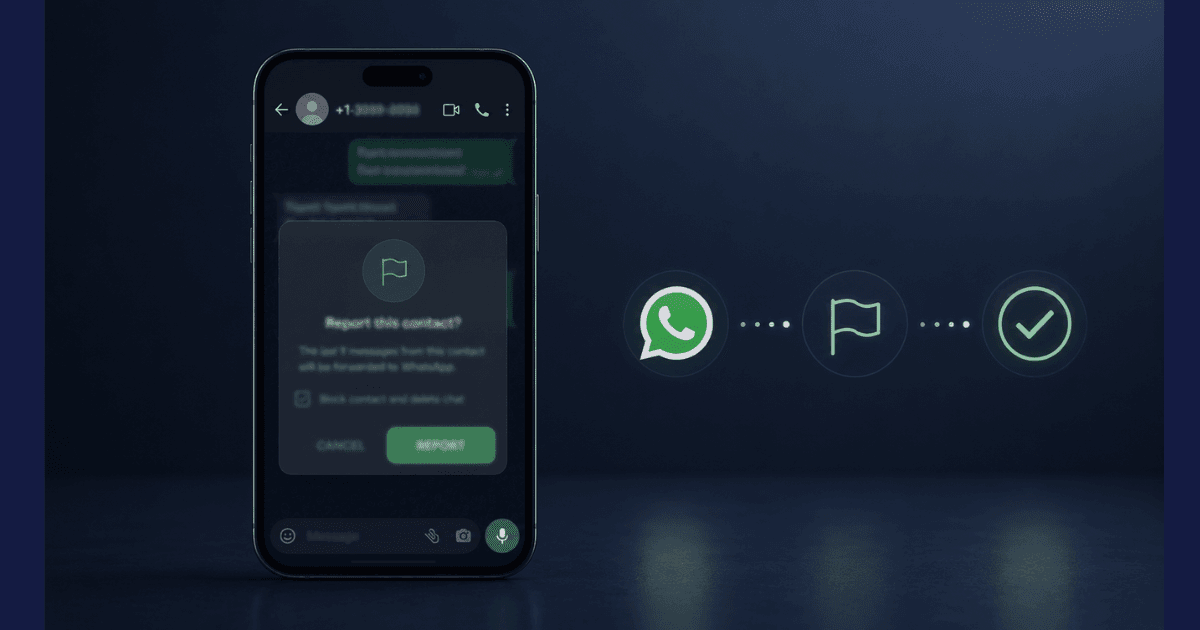
Once evidence is preserved, report through WhatsApp's in-app system, which processes reports relatively quickly compared to many platforms. Open the chat, tap the contact name to open their profile, scroll down, and select Report Contact, choosing to block and delete the chat only after your evidence is fully saved. When you report a contact, WhatsApp automatically receives the five most recent messages from that conversation, which is part of why evidence should be captured before you report rather than after. The WhatsApp FAQ documents the exact policy and process if you want to confirm details before reporting.
File Federal Cybercrime Reports
WhatsApp scams routinely cross borders, so federal reporting matters alongside the in-app report. In the United States, file with FBI IC3 and the FTC's Complaint Assistant, alongside local police for any in-person elements. UK victims can report to Action Fraud, and elsewhere, your national cybercrime unit is the right first stop. Provide your evidence package, the scammer's phone number, payment details, and any other linked accounts; combined reports from multiple victims help build cases that are actually prosecutable, since a single small-dollar complaint rarely triggers a full investigation on its own.
Coordinate With Your Bank If Money Was Sent
If money changed hands, the first 48 hours offer by far the highest recovery probability. Call your bank's fraud line directly rather than using an online banking message system, since speed matters more than almost anything else at this stage. Report the transaction as fraudulent and request an immediate hold or reversal; for credit card payments, file a chargeback under fraud, and for crypto transfers, report directly to the exchange, since registered exchanges can sometimes freeze suspicious accounts under law enforcement request. Wire transfers can occasionally be intercepted if funds haven't yet reached the recipient, so save every bank communication as part of your evidence trail.
Need Expert Help?
Our team has resolved thousands of cases. Get confidential support now.
Watch for Identity Compromise Signals
Some WhatsApp scams aim to take over your account rather than just extract a payment, and a compromised account is sometimes just the first step toward WhatsApp blackmail. If you received an SMS code you didn't request, treat that as a takeover attempt in progress: enable two-step verification immediately, set up a PIN, add a recovery email, and watch for follow-up scams targeting your own contacts using your name. If your account does get compromised, contact WhatsApp Support right away for recovery, and warn your contacts in parallel so they don't fall for scams sent from your own number.
Search for Linked Reports
Scammers rarely target just one person, which is why part of learning how to report a scammer on WhatsApp effectively includes searching for linked reports before you file. Search the scammer's phone number on Google, ScamSurvivors, and romance scam forums, check Reddit's r/Scams for similar patterns, and run the IBAN or crypto wallet address through scam-tracking databases. A reverse image search on their profile photo frequently turns up the same picture used against other victims. Linking your report to existing intelligence gives law enforcement a stronger case than any single report can on its own.
Pursue Legal Action and Protect Yourself Going Forward
Once a scammer is identified, usually through law enforcement rather than independently, civil action becomes an option: a civil suit for fraud and intentional infliction of emotional distress, a class action if other victims of the same ring come forward, asset freezing through court orders, and cooperation with international law enforcement when the scammer operates from abroad, which is increasingly common given how easily these scams cross borders.
After dealing with one scammer, it's worth hardening your WhatsApp setup against the next attempt. Enable two-step verification with a strong PIN, set "Last seen," "Profile photo," and "Status" visibility to contacts only, turn off read receipts if that's comfortable for you, and restrict who can add you to groups to your existing contacts. Using WhatsApp's spam-reporting features actively also helps, since it reduces the cold-contact attack surface that scammers rely on in the first place.
Get Emotional and Practical Support
WhatsApp scam victims often face shame, financial loss, and emotional trauma all at once, and the practical steps above work better alongside real support. Talking to a trusted friend or family member helps more than most people expect, and it's worth remembering that scammers are professionals running a well-tested playbook; being deceived by one is not a moral failing. Romance scam survivor communities exist online for exactly this situation, and therapy can help process the emotional impact where it lingers. Avoid re-engaging with the scammer "to get closure," since that impulse is usually exactly what they're counting on.
How to Report a Scammer on WhatsApp: Take Action and Move Forward
Reporting a scammer on WhatsApp is a sequence of clear steps: preserve evidence, report in-app, file federal complaints, coordinate with your bank if money was sent, search for linked cases, and pursue legal action where it's available. Each step protects future victims as much as it helps your own case, and combined, they turn a chaotic situation into a manageable one. Specialist support exists for both the financial and emotional aftermath, and reaching out early tends to shorten every stage of the process. If sextortion was involved, dedicated support for WhatsApp sextortion reports is available for both active threats and longer-term recovery, and what feels like an isolated, embarrassing incident is very often part of a documented pattern that professionals see every day.
About the Author
Altahonos Team
The Altahonos Team consists of cybersecurity and online reputation management specialists with extensive experience in digital threat mitigation and content removal strategies, helping individuals and businesses protect their digital presence.
Related Resources
Trusted by Thousands

Based on 488+ verified reviews