
How to Stop Cyberstalking: Safety and Response Guide
Knowing how to stop cyberstalking starts with an uncomfortable reframe: stalkers do not always rely on sophisticated technical methods to find you. They may be finding you through information you published, accounts you still share, and people who answer their questions without realising who is asking. Cyberstalking is persistent, targeted attention that continues after you have made clear it is unwelcome, and it differs from ordinary harassment in one important way: it involves repeated behaviour directed at a specific person. This guide covers cutting off the supply of information, documenting the pattern properly, reporting it so it is taken seriously, and rebuilding your privacy afterwards.
How Cyberstalkers Find Your Information
Before changing anything, work out how they know what they know. The answer shapes everything that follows.
Public sources are a common starting point: social posts with location data, tagged photos from other people, a public follower list, a running app that shares routes, a review left under your real name, a professional profile listing your employer.
Shared access is often overlooked: a streaming account you never removed them from, a shared cloud photo library, a family phone plan, a device you signed into at their home, a password manager entry, a smart home device still linked to an old account.
Social engineering is another route people may not consider: mutual friends who mention where you were at the weekend, a colleague who confirms your working hours, a family member who answers a friendly message.
Data brokers aggregate addresses, phone numbers, relatives, and previous addresses into single searchable profiles, and these records can provide a starting point for unwanted tracking.
Write down which of these apply to you. Closing one source of information while leaving another accessible can allow the stalking to continue.
How to Limit a Cyberstalker's Access to Your Information
Check Shared Access
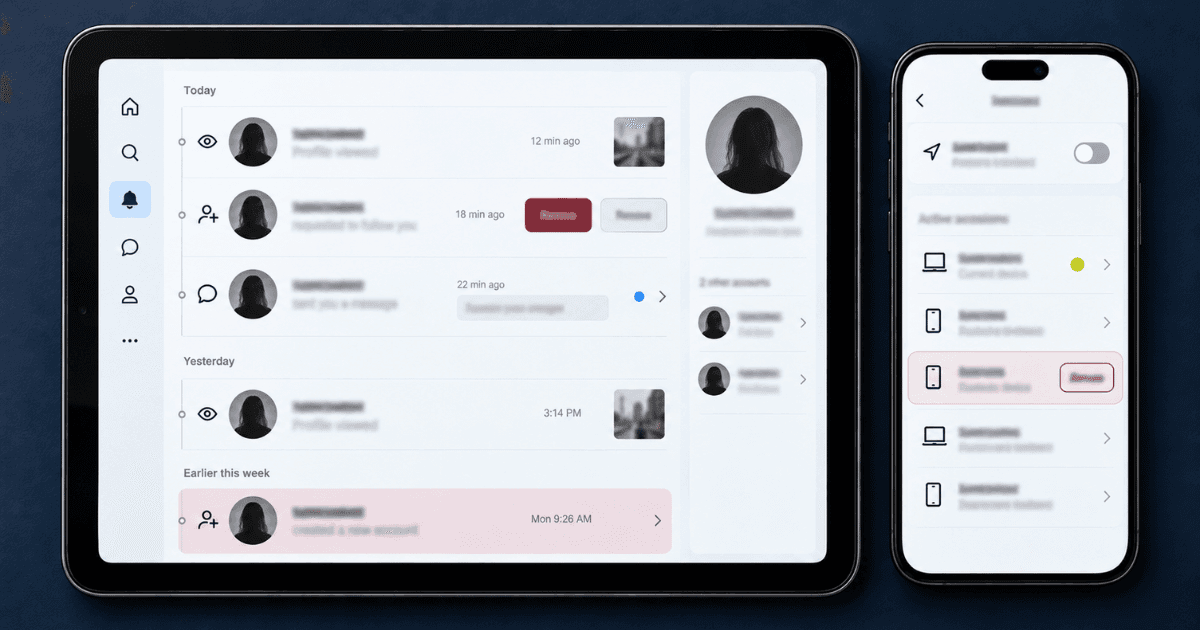
Shared accounts and connected devices can create serious security risks. If it is safe to do so, change your email password first, followed by passwords for financial, social, and cloud accounts. Use unique passwords and enable two-factor authentication with an authenticator app. Review active sessions, remove unfamiliar devices, and check shared accounts and location settings. If you suspect monitoring software, avoid making changes on the affected device, as they may alert the person responsible. Consider using a separate, trusted device for sensitive activity and seeking advice from a domestic abuse service, particularly if a former partner had access to your phone.
Reduce What Is Public
- Set social accounts to private and hide follower lists.
- Turn off location tagging and review older posts that contain it.
- Remove your profile from data broker sites, which each have their own opt-out process.
- Ask close contacts not to tag you or post about your whereabouts.
- Check what a search of your name and your username returns, and work through it.
Knowing how to clean your digital footprint can help you work through these steps systematically and identify older information that may still be exposing more about you than you realise.
Tell People What to Say
The people around you are part of your security. Tell them plainly: do not confirm where I am, do not accept follow requests from accounts you do not recognise, and tell me if someone asks about me. This may feel awkward, but it can help close an important route through which someone could obtain information about you.
Document the Pattern, Not Just the Incidents
Cyberstalking cases often depend on establishing a pattern of repeated behaviour. A single message may not meet the legal threshold for stalking, depending on the circumstances and jurisdiction. Repeated messages from multiple accounts over time, particularly those referencing places you have visited, can provide stronger evidence of targeted harassment. Keep a single running log with the date and time, the platform, the account used, what was said or done, and how you knew it referenced you. Screenshot everything, including the account handle and timestamp in the same frame.
Save originals rather than cropped images where possible, because metadata may matter when evidence is reviewed. Record offline incidents too, such as an unexpected delivery, a call from a withheld number, or someone appearing where you were. Although these may seem unrelated individually, documenting them alongside online activity can help establish a broader pattern. Store the log somewhere the person cannot reach, ideally in a secure account created after the situation began. This documentation can also support a formal complaint, and knowing how to report cyber crime can help you organise the evidence and submit it through the appropriate channels.
Need Expert Help?
Our team has resolved thousands of cases. Get confidential support now.
Reporting So It Is Taken Seriously
Platforms
Report each account under harassment or stalking, and where a platform offers it, note that this is part of an ongoing pattern involving other accounts. Block after preserving evidence and reporting. If new accounts appear, report each one and reference previous reports where possible.
Law Enforcement
Cyberstalking may be a criminal offence depending on the circumstances and jurisdiction. In the United States, both federal and state laws address stalking. The US Department of Justice explains how stalking is defined and addressed under the law. Bring your incident log in chronological order and request a report number, even if no immediate action is taken. Explain the repeated behaviour clearly and ask that it be documented as potential stalking rather than an isolated harassment incident.
Support Services
If the person is a former partner, a domestic abuse service may be able to help you assess the technology-related risks. The National Domestic Violence Hotline provides digital safety planning resources, including guidance for situations where changing a password or removing shared access may create additional risks.
What to Do If Cyberstalking Continues
Some cases persist after every reasonable step. At that point, the goal shifts from stopping the person to reducing what they can do. Consider seeking a formal protective order where applicable, as it may provide additional legal protection against further contact, depending on local laws and circumstances.
Move your public footprint deliberately: use a new email for anything public-facing, consider a phone number that is not tied to your existing accounts, and reduce the personal details visible on professional profiles. These changes can help limit the information available to the person.
Where the stalking has produced published content about you, such as posts, comments, or sites set up in your name, getting professional help with online harassment removal can make it easier to coordinate content removal and ongoing monitoring. Documentation collected through these efforts may also support a legal complaint.
Frequently Asked Questions
How do I work out how they know what they know?
Go through what they have referenced and ask where each item is visible: a public post, a tagged photo, a shared account, a data-broker listing. The answer decides whether this is an access problem or a visibility problem, and they need different fixes.Is one message enough to report?
It is enough to report, though a single message may not meet the threshold for stalking anywhere. That is why the log of dates, handles and content matters: the pattern is what carries the case.I think they have access to my devices or accounts. Where do I start?
Change the email password first, from a device you trust, then everything that resets through it. If someone with physical access could be involved, do this where it is safe to do so rather than immediately.Does changing my phone number help?
It closes one channel and is worth doing, but if the information is flowing from public profiles or a shared account, a new number changes little. Find the source before changing things around it.What if it is someone I know?
That is the most common version, and it changes the practical work: shared accounts, family plans, connected devices and people in common all need reviewing, not just platform settings.Taking Action Now
Knowing how to stop cyberstalking starts with identifying how someone accesses your information and taking steps to limit that access. Secure your accounts, remove shared devices and location permissions, and reduce the personal details available online. Keep a dated record of incidents, preserve evidence, and report repeated harassment to the relevant platforms and law enforcement authorities.
If cyberstalking continues despite these precautions, additional support can help you protect your privacy and assess your options. Getting professional help to stop cyberstalking can assist with content removal, ongoing monitoring, and coordinating appropriate next steps. Taking action early can help you regain control over your digital privacy without engaging directly with the person responsible.
About the Author
Altahonos Team
The Altahonos Team consists of cybersecurity and online reputation management specialists with extensive experience in digital threat mitigation and content removal strategies, helping individuals and businesses protect their digital presence.
Related Resources
Trusted by Thousands

Based on 587+ verified reviews