

IC3 Complaint Center: How to Report Cybercrime to FBI
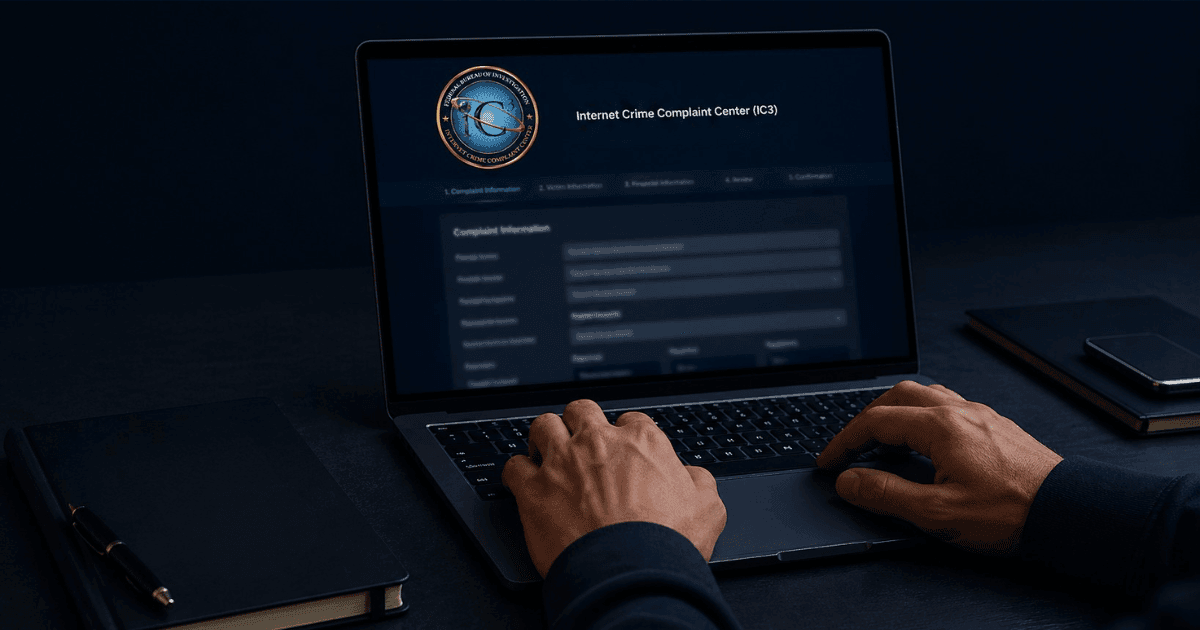
The IC3 Complaint Center, the FBI's Internet Crime Complaint Center, is the primary federal portal for reporting online fraud, blackmail, sextortion, and cybercrime in the United States. Filing an IC3 complaint is often the most important step victims can take after a cyberattack: it creates an official federal record, triggers FBI review, and contributes to investigations that may already be underway against the same perpetrators. This guide explains exactly what IC3 is, which crimes to report there, how to file effectively, and what happens after you submit.
What Is IC3 and What Does It Do?
The Internet Crime Complaint Center, accessible at IC3.gov, was established by the FBI and the National White Collar Crime Center to receive, process, and refer complaints about internet-facilitated criminal activity. IC3 analysts review incoming complaints, identify patterns across multiple reports, and refer cases to appropriate federal, state, and international law enforcement agencies.
IC3 does not investigate individual complaints in isolation. Its power comes from aggregation when multiple victims report the same perpetrators, phone numbers, cryptocurrency wallets, or tactics, IC3 analysts can connect the dots and build actionable intelligence for investigators. This means your report contributes to a larger investigation even if you never receive direct communication about your specific case. Some of the most significant prosecutions of sextortion networks and romance scam operations in recent years were built on hundreds of IC3 complaints pointing to the same criminal infrastructure.
IC3 also publishes the annual Internet Crime Report, which tracks trends in cybercrime across the United States and helps law enforcement allocate resources. In 2023 alone, IC3 received over 880,000 complaints representing more than $12.5 billion in reported losses. Reporting to IC3 is free, confidential, and available 24/7 there is no minimum financial loss required to file.
Which Crimes Should You Report to IC3?
IC3 accepts complaints about a wide range of internet-facilitated crimes:
- Online extortion and blackmail: Threats to release intimate images, private information, or damaging content unless payment is made
- Sextortion: Coercing victims into paying or providing additional content through intimate image threats
- Romance scams: Fraudulent romantic relationships designed to extract money
- Investment fraud: Fake cryptocurrency platforms, pig butchering scams, and Ponzi schemes
- Business email compromise: Impersonating executives to authorize fraudulent wire transfers
- Ransomware: Malicious software encrypting files and demanding payment
- Phishing: Fraudulent emails or messages harvesting credentials
- Identity theft: Unauthorized use of personal information
If you are being blackmailed online or facing sextortion, file an IC3 complaint immediately, these are among the crimes IC3 most actively tracks and refers for prosecution.
How to File an IC3 Complaint: Step by Step
Step 1: Document Everything First
Before filing, compile your evidence. IC3 complaints with comprehensive documentation are significantly more actionable than vague submissions. Gather:
- Screenshots of all threatening messages with timestamps and usernames
- The perpetrator's email addresses, phone numbers, usernames, and profile URLs
- Any cryptocurrency wallet addresses, bank account numbers, or payment details requested
- Dates, times, and platforms where all communications occurred
- Records of any money transferred
Step 2: Go to IC3.gov
Visit IC3.gov and click "File a Complaint." The portal is available 24/7 and does not require account creation.
Step 3: Complete the Complaint Form
The IC3 form asks for:
- Your personal information (name, address, contact details)
- Information about the perpetrator (names, email addresses, websites, IP addresses if known)
- Financial loss details; amounts demanded, amounts paid, payment methods
- A detailed narrative of what happened in chronological order
- Supporting documentation you can attach screenshots and files directly
Write your narrative clearly and factually. Include specific dates, the exact wording of threats, and all identifying information you have about the perpetrator. Avoid emotional language and stick to verifiable facts.
Step 4: Submit and Save Your Confirmation
After submission you will receive a complaint number. Save this number — it is your reference for any follow-up and may be requested by local law enforcement if you file a police report simultaneously.
Need Expert Help?
Our team has resolved thousands of cases. Get confidential support now.
After You File: What Happens Next
IC3 does not acknowledge individual complaints or provide case updates to victims directly. This is a common source of frustration, but it does not mean your complaint was ignored. Analysts review all complaints and:
- Flag complaints matching known criminal patterns for immediate referral
- Aggregate complaints involving the same perpetrators for coordinated investigation
- Share intelligence with FBI field offices, Secret Service, and international partners
Investigations take time, particularly for international cases involving cryptocurrency. However, FBI and DOJ prosecutions of sextortion networks, romance scam operations, and business email compromise rings frequently cite IC3 complaint data as foundational to building cases. Your report matters even if you hear nothing back.
File locally too. IC3 is a federal reporting portal, not a replacement for local police reporting. Visit your local police station with printed evidence. A local police report creates an official record for insurance claims, civil litigation, and coordinated local-federal investigation.
If Content Has Been Distributed
If the perpetrator has already posted intimate or damaging content, IC3 reporting should happen simultaneously with content removal efforts, not instead of them. Report to IC3 and escalate your case urgency. Separately, submit DMCA takedown requests if you hold copyright to the content, and contact unauthorized content removal specialists who can coordinate removal across multiple platforms while the investigation proceeds.
Image removal and video removal services can act within hours of contact, independently of any federal process. Content removal does not interfere with prosecution — both tracks should proceed in parallel.
Maximizing the Impact of Your IC3 Report
The quality of your IC3 complaint directly affects its usefulness to investigators. To maximize impact:
- Be specific: Exact dates, exact wording, exact amounts. Vague narratives are harder to act on.
- Include financial details: Wallet addresses, account numbers, and wire transfer records are high-value investigative leads.
- Report promptly: The sooner you file, the more likely investigators can take action before perpetrators move funds or delete accounts.
- File even if you paid: Many victims don't report extortion because they feel embarrassed. IC3 data shows this is exactly when reporting matters most: payment data and wallet addresses are among the most actionable leads investigators receive.
- Follow up locally: Combine your IC3 filing with a local police report to ensure your case has representation at both federal and local levels.
Getting Additional Help
If you're unsure where to start, cyber blackmail help is available around the clock for active situations. Specialized support services offer evidence preservation, law enforcement coordination, and content removal that run parallel to and complement your IC3 filing. Early intervention consistently improves outcomes.
You are not alone. The FBI's own data shows that sextortion and online extortion affect victims across every demographic. Reporting, documenting, and seeking professional support are the most effective responses available.
About the Author
Altahonos Team
The Altahonos Team consists of cybersecurity and online reputation management specialists with extensive experience in digital threat mitigation and content removal strategies, helping individuals and businesses protect their digital presence.
Related Resources
Trusted by Thousands

Based on 478+ verified reviews