

Remove Your Content From Revenge Porn Websites
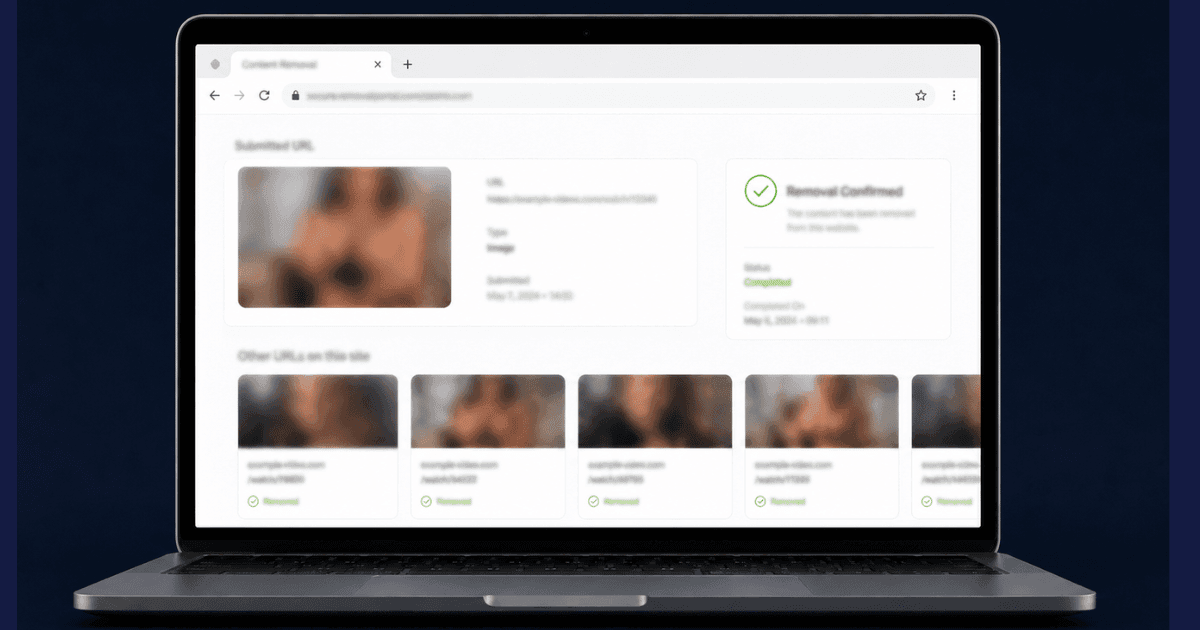
Removing content from revenge porn websites starts with knowing that finding your private images there is a deeply upsetting experience, and it can feel as though you have lost control of your own life overnight. Please know that you have not, and that you are not alone. Non-consensual intimate content is something many people face, and there are clear, established paths to getting it removed, even when the site itself seems designed to make that feel impossible. This guide walks through those paths calmly and in order, so you can focus on one step at a time rather than the whole situation at once; there is no need to solve everything today, only to take the next right step. You do not have to be technical or legally trained to start. You just need a plan, a little patience, and a willingness to ask for help where it makes sense.
First, Take a Breath and Document Everything
Before you contact anyone, capture evidence. It may feel counterintuitive to spend time recording content you want gone, but documentation is what makes removal requests successful, and it protects you if the situation escalates.
Gather the following where you can:
- The exact web addresses of every page showing the content, not just the site homepage.
- Screenshots of the pages, including any usernames, captions, or contact details.
- The date and time you found each item.
- Any messages from the person responsible, if you know who posted it.
Store this in a single folder that only you can access. Try to view the material as evidence rather than something to dwell on, and lean on a trusted friend or professional if looking at it is painful. You will not need to keep revisiting it once your documentation is complete.
Send Removal Requests to the Website
When you're trying to remove content from revenge porn websites, the site itself is usually the first and fastest point of contact, even though it may not feel that way given the context. Many sites, even ones that host this kind of content, have a removal or abuse contact because their hosting providers and payment processors require it. Look for an abuse email, a contact form, or a removal page, often in the footer, sometimes labeled as a "DMCA" or "content complaint" section rather than anything obviously related to consent.
When you write, be clear and factual:
- State that the content is intimate and was shared without your consent.
- Provide the specific web addresses.
- Request removal and confirmation once it is done.
You do not need to over explain or plead. A calm, direct request is enough, and adding extra emotional detail rarely speeds things up. Keep a copy of everything you send, including the date, in case you need to reference it later or escalate. Some sites comply quickly, sometimes within a day or two, while others delay, request unnecessary verification, or ignore requests entirely, which is where the next steps come in.
Go to the Host and Search Engines
If a site refuses or stays silent, you often have more leverage with the companies behind it than with the site itself.
Contact the Hosting Provider
Every website relies on a hosting company, and most hosts prohibit non-consensual intimate content in their terms of service. You can look up who hosts a site using publicly available lookup tools, then send your removal request to that host directly. Hosts can act even when the site owner will not.
De-index From Search Engines
Even before content disappears from a site, you can reduce who finds it by asking search engines to remove the pages from their results. Major search engines offer dedicated processes for taking down non-consensual intimate imagery from search. De-indexing does not delete the original file, but it makes the material far harder to stumble upon, which meaningfully limits the harm while you pursue full removal. How to remove leaked content online often requires addressing both the original source and search results rather than relying on either approach alone.
Need Expert Help?
Our team has resolved thousands of cases. Get confidential support now.
Use Hash Based Blocking Tools
Some of the most reassuring tools available today use hashing. A hash is a unique digital fingerprint created from an image or video. Instead of uploading your actual content anywhere, these tools generate the fingerprint on your own device and share only that code with participating platforms, which then detect and block matching content.
Two free, victim centered services are worth knowing:
- StopNCII is designed for adults and lets you create hashes of your intimate images so partner platforms can help stop them from being shared or reshared.
- Take It Down is run by the National Center for Missing and Exploited Children and helps when the images were taken of someone who was under eighteen at the time.
These tools do not reach every corner of the internet, but they cover many major platforms and can quietly prevent a great deal of resharing without exposing you further.
When Sites Refuse to Cooperate
Some revenge porn websites are built specifically to resist removal. They hide their ownership, ignore requests, use hosting in places that shrug off complaints, or re-upload content shortly after it is taken down; a few even design their entire structure around making removal as slow and frustrating as possible. This is exhausting to face alone, and it is the point at which professional help earns its place.
Specialist removal teams do this work every day. They know which hosts respond, how to escalate through the right channels, and how to keep pushing when a single request is not enough. Removing revenge porn requires coordinated action across multiple sites, since a single image often ends up mirrored across several platforms rather than staying in one place.
Reappearance is common, so removal is often less a single event than an ongoing effort. Having a team watch for re-uploads means you do not have to keep searching for your own images to stay protected, checking the same handful of sites over and over just to make sure nothing has resurfaced.
If You Want to Involve Authorities
In many places, sharing intimate images without consent is against the law, and reporting can be an important step both for your own protection and to hold the person responsible accountable. It can also matter for the broader pattern: if the person has done this before or does it again, a police report creates a record that may connect to other cases. Reporting revenge porn varies by location, so the appropriate authorities and reporting channels may differ depending on where you live and where the person responsible is located.
This is your decision to make on your own timeline. Some people report right away, wanting the process started while the details are fresh; others focus first on removal and consider reporting later, once the most urgent exposure has been addressed. Both are valid, and neither approach is more correct than the other. Altahonos is not a law firm and does not provide legal advice, so if you want guidance on your specific legal options, including what evidence tends to matter most or how local law defines the offense, a qualified professional in your area can advise you.
You Can Get Through This
Removing content from revenge porn websites is rarely instant, but it is achievable, and every step you take reduces the reach of the material, even before everything is fully gone. Work through it in order: document, request, escalate to hosts and search engines, use hash blocking, and bring in specialists when sites refuse to cooperate. Some cases resolve in days, others take weeks of steady follow-up, but the direction is the same either way, less exposure, less reach, and eventually less of a presence in your life.
Most importantly, be kind to yourself along the way. What happened is not your fault, the shame belongs to the person who shared the content, and support is available whenever you are ready to ask for it, whether that's a friend, a professional, or a team that handles this kind of removal every day. You do not have to carry this alone, and you do not have to have it all figured out before you start; the first message you send or the first screenshot you take is already progress. One step at a time, you can remove leaked content and take back control.
About the Author
Altahonos Team
The Altahonos Team consists of cybersecurity and online reputation management specialists with extensive experience in digital threat mitigation and content removal strategies, helping individuals and businesses protect their digital presence.
Related Resources
Trusted by Thousands

Based on 488+ verified reviews