

How to Stop Sextortion on Bumble: Safety Guide
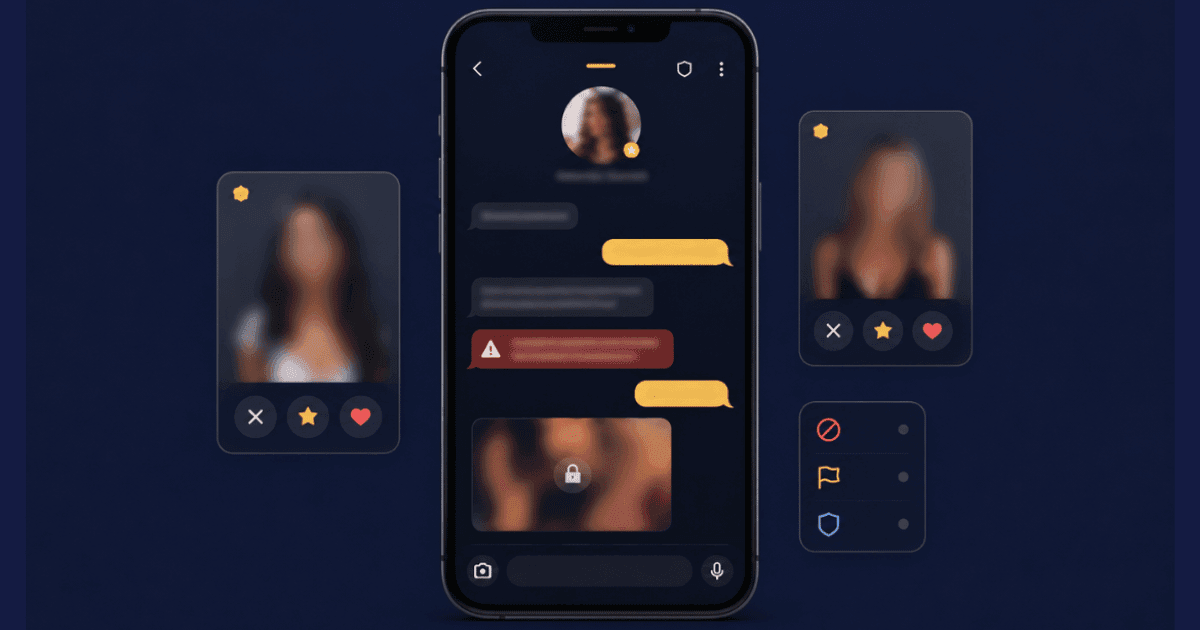
Sextortion on Bumble follows a compressed version of the pattern seen across dating apps, and the compression itself is the point. The 24 hour match window, the expectation that women open the conversation first, and the visible verification badge all combine on the platform to create a sense of a safe space running against a ticking clock. Someone running a scheme uses both halves of that combination, the trust and the time pressure, against the person on the other end of the match. If you are being threatened after a Bumble match, this guide sets out how to stop sextortion on Bumble in clear, practical terms: what to do in the first hour after the threat arrives, how to report the account, and what can be done about content that has already been sent.
What Sextortion on Bumble Is and How It Happens
The sequence behind sextortion on Bumble rarely varies, and it follows the same broad pattern seen in dating app blackmail more generally; recognizing each stage as it happens is what makes an early exit possible.
The Match and the Move Off Platform
A match appears with a well presented profile, often carrying the verification badge that gives the profile an added layer of apparent legitimacy. Conversation moves quickly and warmly from the first message, building a sense of connection in a short space of time. Within that short time there is a suggestion to continue on another app, usually framed around the match expiring on Bumble or the person saying they barely check Bumble itself, both of which push the conversation off the platform where Bumble's own tools can no longer see it.
The Content Request
Once off the platform, the conversation becomes intimate at a pace that mirrors how quickly it started. Content is requested from the other person, usually with something sent first, a move designed specifically to make refusing feel unfair or out of step with how the conversation has gone so far. In most cases that first image is not even genuinely theirs, it is taken from someone else entirely and used to lower the other person's guard.
The Threat Arrives
Minutes after receiving anything back, the tone of the conversation changes abruptly. Screenshots of what was sent arrive as proof it is now in someone else's hands, frequently alongside a screenshot of your social profile or a list of names pulled from it, paired with a demand and a deadline measured in hours rather than days.
Why the Deadline Is Short
The reason the deadline is kept short is straightforward: fear peaks early in a situation like this, and judgement only returns once that initial fear has had time to settle. The whole script, from the match to the threat, is designed to complete and extract a payment or a reaction inside that narrow window, before clearer thinking has a chance to catch up with it.
What to Do in the First Hour
Stop Responding
Every reply, including a refusal, tells the other side that the message reached a real person who is worried, and that reaction is exactly what keeps the scheme moving forward. Silence gives them nothing to work with, no fear to read and no opening to push against, which makes it the single most effective step available to you in the first hour. Do not ask what they want, even out of a need to understand the situation. Asking is read as a willingness to negotiate, and it tends to raise the number rather than settle it.
Do Not Send Money
Paying identifies you as someone who pays. The usual result is a second demand within days and a third after that, with the content still in place. Payment is requested through gift cards, crypto, and transfer apps precisely because it cannot easily be undone. If money has already gone, contact your payment provider straight away and keep the records. Stopping now still changes the trajectory.
Preserve the Evidence
Accounts disappear quickly once the threat has been made, so gathering evidence cannot wait until things feel calmer.
- Screenshot the Bumble profile including photos, bio, and the verification badge if present
- Screenshot the full Bumble conversation with timestamps
- Screenshot the conversation on whichever app they moved you to
- Save their usernames on both platforms
- Record any wallet addresses, payment handles, or gift card codes
Keep all of it outside the apps involved, in cloud storage or an email to yourself, so none of it is lost if an account or a phone becomes inaccessible.
Protect the People They Threatened to Contact
The threat depends entirely on being able to reach your circle, so cutting off that reach removes most of its power. Set your social accounts to private, hide your follower and following lists, and tighten who can send you messages across those accounts. Most threats to distribute content to friends or colleagues rely specifically on those lists being publicly readable, and once they are not, the threat has far less to work with.
Reporting Sextortion on Bumble
Inside Bumble
Open the match, use the block and report option, and choose the category covering threats or harassment rather than a general complaint. State clearly that payment was demanded and include any relevant screenshots. Reports still matter even if the account has already been abandoned; Bumble's own Safety Centre explains the available options. If things are already escalating, getting help with Bumble blackmail can make it easier to coordinate the reporting and evidence steps.
To Law Enforcement
File with your local police service and, in the United States, with the FBI Internet Crime Complaint Center. Bring your evidence in date order, including payment details, which are often the most traceable part of the case and the part investigators can act on fastest. The circumstances feel humiliating from the inside. From the other side of the desk, this is one of the most frequently reported online crimes there is.
Preventive Blocking of Images
StopNCII.org lets adults generate a digital fingerprint of intimate images directly on their own device, which participating platforms then use to block matching uploads before they can be posted. The image itself never leaves your possession at any point in that process. If specific content has been threatened, even if nothing has been posted yet, this is one of the few genuinely preventive measures available, and it is worth doing while the threat is still only a threat.
Need Expert Help?
Our team has resolved thousands of cases. Get confidential support now.
If Content Has Been Shared
Once content has been shared, the priority shifts from prevention to containment, and speed matters more than being thorough on the first pass. Start by establishing what is actually visible: search your own name, your username, and any variations of both, across the platforms where the content could plausibly surface. Many threats are never actually carried out, so knowing the real, current position changes both the practical steps that follow and how the next few days actually feel.
Where content has appeared, removal has to run across the host itself, the search engines indexing it, and any mirrors that have already picked it up. The recurring problem is re-uploads on different hosts over the following weeks, which is why ongoing monitoring matters just as much as the first takedown does. Removing leaked content effectively therefore means staying on top of that pattern over time, not just clearing the first copy.
Preventing the Next Sextortion Attempt on Bumble
Preventing sextortion on Bumble comes down to a few absolute habits. Stay on Bumble until you have had a live video call with the match, since moving platforms early is not about convenience; it is the step that removes both the platform's ability to act and your ability to report through it. Treat the verification badge as weak evidence, since it only confirms a posed selfie matched the profile photos at one moment, nothing about identity or intent.
Never send intimate content to someone you have not met in person, even if they send something first to make it feel reciprocal. Keep your employer, your area, and your other social handles out of early conversation, since these are exactly the details that give a later threat its force. The same warning signs also matter when trying to avoid Bumble dating scams more broadly, especially when a match pushes for fast intimacy, off-platform contact, or personal information early in the conversation.
Taking Action Now
Sextortion on Bumble moves fast, so if this is live right now, stop replying without sending a final message, capture screenshots of both conversations, the profile, and any payment details, make your social accounts private and hide your follower lists, report the match inside Bumble before blocking, and file a police report while getting professional support in place as early as possible. Slowing that early decision down, and refusing to answer at all, reduces the leverage the scheme depends on, since the pressure is much harder to sustain without continued engagement from you. If you do not want to manage each step alone, getting help to stop sextortion can make it easier to coordinate the reporting, evidence preservation, and removal steps from the start.
About the Author
Altahonos Team
The Altahonos Team consists of cybersecurity and online reputation management specialists with extensive experience in digital threat mitigation and content removal strategies, helping individuals and businesses protect their digital presence.
Related Resources
Trusted by Thousands

Based on 443+ verified reviews