
How to Spot a Bumble Scammer: Warning Signs Guide
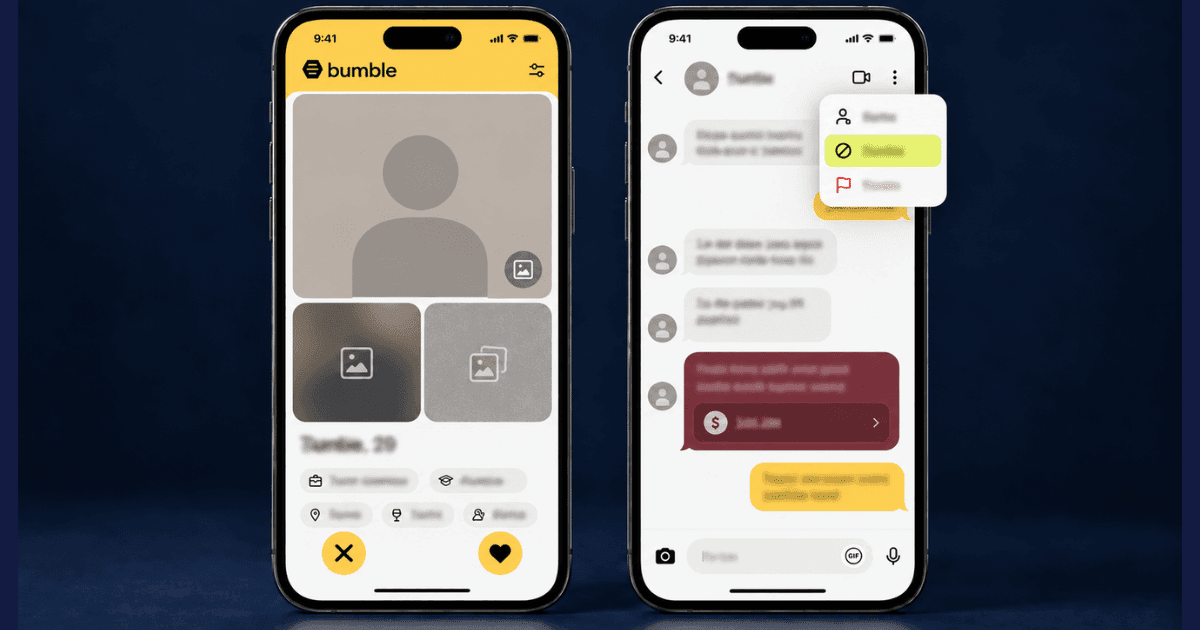
Learning how to spot a Bumble scammer is mostly a matter of knowing which details a real person gets right without trying. Bumble's messaging features and photo verification badge make the app feel safer, and that reputation is exactly what fraudsters rely on. They are not trying to beat your judgement in a single message. They are trying to earn your trust over time so the request that follows feels reasonable. A convincing profile, a friendly conversation, and an ordinary-sounding explanation can make suspicious behaviour harder to recognise. The warning signs often emerge gradually, especially when someone begins pushing for personal information, private conversations, or financial help. This guide walks through the signals that appear in the profile, in the conversation, and in the requests, so you can recognise the pattern early and leave before anything of yours is in someone else's hands.
Why Bumble Attracts a Particular Kind of Fraud
Every dating platform draws the scam that fits its mechanics. On Bumble, three features shape the behaviour you will see. The 24-hour match expiry can create a sense of urgency. A genuine match may let a conversation lapse without drama, while a fraudster may use the clock as a tool, pushing to move to another app within the first few exchanges so their account can be abandoned without losing contact with you.
The verification badge is treated as proof by many users, but it only indicates that someone has completed Bumble's photo verification process, not that their name, identity, or intentions are genuine. Treating the badge as a complete identity check is a mistake. Bumble's professional framing, with job titles and education fields, also gives fraudsters a ready-made credibility story. An expat engineer on contract abroad can use that explanation to account for odd hours, poor video quality, and later, requests for money. These credibility cues are especially important to question when trying to avoid Bumble dating scams.
Profile Signals Worth Pausing On
Before a single message, the profile itself carries information. Certain details in photos and written descriptions can help you recognise suspicious patterns before a conversation begins.
Photo patterns:
- Every image is high resolution and well lit, with no casual or unflattering shot anywhere in the set.
- Photos show the same posed expression and similar backgrounds, as if pulled from one shoot or one person's public gallery.
- Group photos are absent, or the person is never clearly the focus of one.
- Images contain watermarks, cropped logos, or inconsistent aspect ratios.
Written details:
- The bio is short, generic, and could describe anyone, or it is unusually polished marketing copy.
- The job is high status but vague: entrepreneur, investor, offshore engineer, or surgeon on deployment.
- The location is a major city, but the profile mentions travelling or being stationed elsewhere.
- Prompts are answered with lines that appear word for word on other profiles.
None of these signs on its own means fraud. Two or three together, especially the combination of flawless photos and a story that explains future unavailability, are worth taking seriously.
What the Conversation Reveals
The conversation is where the pattern becomes clearer, because scripted behaviour can differ from a genuine exchange.
Speed That Does Not Match Reality
Genuine interest builds unevenly. Scripts often escalate smoothly. Watch for compliments about your character before you have revealed much about yourself, talk of a connection within a day, and pet names early in the conversation. Affection that arrives faster than information can be a warning sign.
The Push to Leave Bumble
Many dating scams involve moving the conversation off the platform, where Bumble's reporting and safety tools are no longer available for those messages. This is a common tactic in online dating scams, and the request usually arrives wrapped in a reason: they barely check the app, their account is expiring, or they prefer voice notes. If someone insists on moving within the first few messages, consider whether the move serves their interests rather than simple convenience.
Answers That Avoid Detail
Ask a specific question about their neighbourhood, employer, or daily life where they claim to be. A genuine person may answer casually and move on, while someone following a script may deflect, answer a different question, or provide inconsistent details. Repeat the question if necessary, but remember that hesitation or delayed replies alone do not indicate fraud.
Video That Never Happens
A short video call can help you assess whether someone matches their profile, although it cannot establish their identity or intentions with certainty. A broken camera, poor signal, shyness, or unusual working hours may be genuine explanations. Repeated avoidance alongside other suspicious behaviour deserves closer attention. Pre-recorded clips also exist, so notice whether the person responds naturally to what you say in the moment.
The Requests That Confirm It
Dating scams often involve requests for money, personal information, or private content. What someone asks for can help you recognise the type of scheme you may be dealing with.
- Money, in any framing: A customs fee, a hospital bill, a phone top-up, or a flight they promise to repay when they arrive. Small initial requests may be used to establish a pattern of giving.
- Investment help: A trading platform, a crypto wallet, or a broker they claim to trust. Be particularly cautious when someone you have only met online encourages you to use an unfamiliar investment service.
- Intimate photos or video: The request may be mutual and may arrive with an image first, designed to make refusing feel unfair. This is where Bumble blackmail can begin.
- Personal identifiers: Your full name, workplace, home area, or family members' names. Sharing these details early can expose you to further pressure.
- A link: A verification site, background check service, or video chat page that asks you to register. Such links may be used to collect payment information or login credentials.
The US Federal Trade Commission accepts fraud reports, while its published guidance can help you assess suspicious requests that may otherwise appear reasonable.
Need Expert Help?
Our team has resolved thousands of cases. Get confidential support now.
Verifying Someone Without Making It Awkward
Verification does not have to feel like an interrogation. Three habits can help you assess whether someone is genuine. Run a reverse image search on their clearest photo, as stolen images may appear on other profiles or social media accounts. However, finding no matches does not confirm authenticity. Ask for a short video call early, using Bumble's in-app feature to avoid sharing your phone number.
Keep the conversation on Bumble until you feel comfortable verifying the person, so its reporting and safety tools remain available. Bumble's Help Centre explains photo verification and reporting options. Avoiding a video call may have legitimate reasons, but repeated resistance alongside requests for money or personal information deserves closer attention.
If You Already Shared Something
Recognising the pattern after the fact is common, but what matters now is how you respond. Stop replying, and do not pay, send more content, or threaten the person back. Before blocking, save the profile URL, username, conversation screenshots with timestamps, payment details, and any accounts they moved you to. Store the evidence securely outside Bumble.
Report the account to Bumble and consider contacting law enforcement. If intimate content is involved, document any published material and explore removal options. At that stage, understanding how to stop sextortion on Bumble becomes important, because evidence preservation, reporting, and removal may need to be handled in the right order. If financial fraud is involved, contact your bank or payment provider promptly to discuss available protections.
Frequently Asked Questions
Does the verification badge mean the profile is genuine?
It only shows that photo verification was completed. It says nothing about the name, identity or intentions behind the account, and treating it as an identity check is a common mistake.Why does the 24-hour match timer matter?
It creates a sense of urgency that fraudsters use as a tool, pushing to move apps within the first exchanges so the account can be abandoned without losing contact with you.What is the most reliable check?
A short video call through the app's own feature, early. Pre-recorded clips exist, so notice whether the person responds naturally to what you say in the moment.They sent an intimate photo first. Is that a tactic?
Frequently, because it makes refusing feel unfair. A mutual-seeming request arriving with an image already attached is one of the clearest signals in these cases.What should I do if I already shared something?
Stop replying, refuse to pay, restrict your audience, save the conversation with timestamps, then report the profile and block last.Taking Action Now
Knowing how to spot a Bumble scammer starts with recognising suspicious profiles, rushed conversations, and requests that put your money or personal information at risk. Take time to verify who you are speaking with, keep sensitive information private, and document concerning behaviour before reporting or blocking an account. These precautions can help you identify potential fraud and respond more safely.
If you have already shared private content or received threats, the situation has moved beyond scam detection. In cases of dating app blackmail, content removal, platform reporting, and evidence preservation may need to be handled together. Acting promptly can help you address privacy risks without continuing direct contact with the person responsible.
About the Author
Altahonos Team
The Altahonos Team consists of cybersecurity and online reputation management specialists with extensive experience in digital threat mitigation and content removal strategies, helping individuals and businesses protect their digital presence.
Related Resources
Trusted by Thousands

Based on 587+ verified reviews